The four parts of a balanced vegetarian soup
A good vegetarian soup balances four components: aromatics, liquid, vegetables, and a protein or hearty element. Once you understand how these parts work together, you can improvise with confidence instead of following a fixed recipe.
Aromatics are the flavor base, typically onion, carrot, celery, and garlic softened in oil or butter. The liquid, usually broth or water, determines how brothy the soup feels. Vegetables add body and texture, while protein such as beans, lentils, or grains turns a light soup into a filling dinner.
- Aromatics: onion, carrot, celery, garlic, sautéed until soft and fragrant.
- Liquid: vegetable broth, water, or canned tomatoes; adjust amount for desired thickness.
- Vegetables: sturdy ones like potatoes and green beans go in early; tender ones like peas and corn go in late.
- Protein: kidney beans or cannellini beans can be added for more protein and texture.
Sources: Cooking Classy
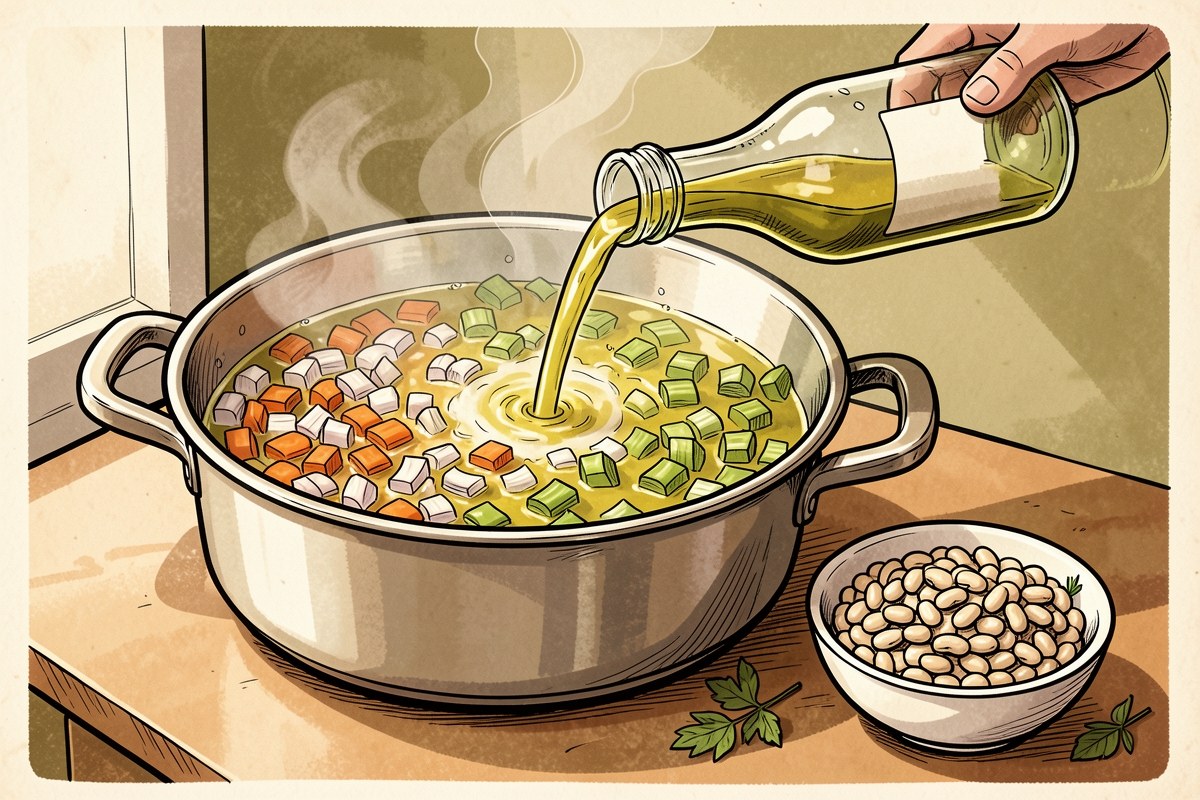
Building flavor with aromatics and browning
Start by heating olive oil in a large pot over medium heat. Add chopped onion, carrot, and celery, and sauté for about 4 minutes until they begin to soften. Add minced garlic and cook for about 30 seconds, just until fragrant, because garlic burns quickly and can turn bitter.
To build deeper flavor through browning, let the vegetables cook undisturbed for a minute or two at a time so they develop brown edges before you add liquid. This browning step adds a savory note that plain simmering does not. You can also adjust flavor later with dried herbs such as basil, thyme, oregano, or marjoram, Italian seasoning, red pepper flakes, paprika, or curry powder.
- Sauté onion, carrot, and celery about 4 minutes.
- Add garlic and cook about 30 seconds.
- For browning, let vegetables sit undisturbed until they develop brown edges before adding liquid.
- Optional flavor boosters: dried herbs, red pepper flakes, paprika, curry powder, a parmesan rind, or a squeeze of fresh lemon juice.
Sources: Cooking Classy
Choosing liquid: broth, stock, and water
The liquid you choose shapes the soup's character. Vegetable broth adds savoriness, while water lets the vegetables' natural flavors come forward. Many beginner vegetable soup recipes use broth plus canned tomatoes for acidity and depth.
If you use water, you may need more salt and seasoning. For a thinner, brothy soup, add more liquid. For a thicker soup, use less liquid or blend part of the vegetables. The method stays the same; only the amount changes.
- Vegetable broth: convenient, flavorful base for most soups.
- Water: neutral; adjust salt and herbs to taste.
- Canned tomatoes: add acidity and body, often used alongside broth.
- Adjust thickness by adding more liquid or blending some of the cooked vegetables.
Sources: Cooking Classy
Adding protein, grains, and beans at the right time
Protein turns a side soup into a main dish. Canned beans are the easiest addition: kidney beans or cannellini beans can be stirred in for more protein and texture. Add them near the end of cooking so they heat through without breaking apart.
If you use grains like pasta or rice, add them with enough time to cook but not so early that they become mushy. As a general rule, add grains during the last 10–15 minutes of simmering, or cook them separately and stir them in just before serving.
The same timing applies to lentils: red lentils cook quickly and can be added with the broth, while brown or green lentils need a longer simmer.
- Canned beans: add in the last 5–10 minutes to heat through.
- Pasta or rice: add in the last 10–15 minutes, or cook separately.
- Red lentils: add with liquid; brown or green lentils: add earlier and simmer longer.
Sources: Cooking Classy
Adjusting thickness and finishing the soup
After the vegetables are tender, taste and adjust. If the soup is too thin, simmer uncovered to reduce liquid, or blend a portion of the soup and stir it back in. If it's too thick, add a splash of broth or water.
Finish with fresh herbs, a squeeze of lemon juice, or a drizzle of olive oil. For a creamy soup without dairy, blend roasted cauliflower or white beans into the base. Fork in the Kitchen describes a 30-Minute Creamy Vegetarian Gnocchi Soup that uses coconut milk for creaminess.
- Thicken: simmer uncovered, blend part of the soup, or add beans.
- Thin: add broth or water.
- Finish: fresh lemon juice, herbs, olive oil, or a swirl of coconut milk.
Sources: Cooking Classy, Fork in the Kitchen
Common beginner mistakes and fixes
New soup makers often run into a few predictable issues. Common mistakes include burning the garlic, adding all the vegetables at once so they cook unevenly, and overseasoning too early before the flavors have melded.
If the soup tastes flat, it likely needs more salt, acid such as lemon juice or vinegar, or umami from a parmesan rind or soy sauce. If vegetables are unevenly cooked, cut them into more uniform pieces next time and add sturdy ones earlier. If beans or pasta turn mushy, add them later in the process, with beans in the last few minutes and pasta in the last 10–15 minutes.
| Soup style | Liquid base | Aromatics | Hearty component and timing | Texture adjustment |
|---|---|---|---|---|
| Broth-based vegetable soup | Vegetable broth plus canned tomatoes | Onion, carrot, celery, garlic sautéed in olive oil | Potatoes and green beans simmered 20–30 minutes; corn and peas added in last 5 minutes | Add more broth to thin, or leave brothy |
| Bean-thickened / blended vegetable soup | Vegetable broth | Garlicky (site describes soup as deliciously garlicky) | Leeks and white beans; total time about 30 minutes | Blend for creamy texture; dairy-free |
| Creamy blended cauliflower soup (no cheese) | Not specified | Not specified | Roasted cauliflower | Blended to a creamy soup without cheese |
Sources: Cooking Classy, Choosing Chia, Fork in the Kitchen
Step-by-step: a basic vegetarian soup method
Use this sequence as a template. It works with almost any combination of vegetables and beans.
- Heat olive oil in a large pot over medium heat. Add chopped onion, carrot, and celery; sauté about 4 minutes.
- Add minced garlic and sauté about 30 seconds, until fragrant.
- Add broth, canned tomatoes, potatoes, dried herbs, salt, and pepper. Bring to a boil.
- Add green beans, then reduce heat and simmer 20–30 minutes, until vegetables are tender.
- Stir in corn and peas; cook about 5 minutes more.
- If using beans, add them in the last 5–10 minutes to heat through.
- Taste and adjust: add salt, lemon juice, or extra herbs as needed.
- If desired, blend part of the soup for a thicker texture, or leave as is.
Sources: Cooking Classy
Slow-cooker variation
If you prefer hands-off cooking, sauté the onions, carrots, and garlic first, then transfer them to a slow cooker. Add potatoes, tomatoes, green beans, herbs, broth, salt, and pepper. Cook on high about 3 hours or low about 6–7 hours. Add peas and corn during the last 30 minutes.
- Sauté aromatics before adding to slow cooker for deeper flavor.
- High: about 3 hours; Low: about 6–7 hours.
- Add peas and corn in the last 30 minutes.
Sources: Cooking Classy
Vegetarian soup recipes to try
Once you know the method, you can explore established variations. Choosing Chia's collection includes vegan minestrone, Cuban black bean soup, creamy cauliflower soup, Instant Pot butternut squash soup, and slow-cooker lentil soup. Tackle Hunger features mushroom barley soup made with vegetable broth and thick vegetable minestrone. Fork in the Kitchen lists roasted cauliflower soup without cheese, vegetarian lasagna soup, and a 30-minute creamy vegetarian gnocchi soup with coconut milk.
These examples show how the same four-part structure adapts across cuisines and dietary needs.
- Vegan minestrone
- Cuban black bean soup
- Creamy cauliflower soup
- Instant Pot butternut squash soup
- Slow-cooker lentil soup
- Mushroom barley soup
- Thick vegetable minestrone
- Roasted cauliflower soup without cheese
- Vegetarian lasagna soup
- 30-minute creamy vegetarian gnocchi soup with coconut milk
Sources: Choosing Chia, Tackle Hunger, Fork in the Kitchen
Frequently asked questions
Can I make vegetarian soup without broth?
Yes. Water works as a neutral base, but you'll need to season more generously with salt, herbs, and aromatics. Canned tomatoes can also add flavor and body. A basic method uses broth, but water is a fine substitute if you adjust seasoning.
Sources: Cooking ClassyHow do I keep beans and pasta from getting mushy?
Add canned beans in the last 5–10 minutes of cooking, just to heat them through. For pasta or rice, add them during the last 10–15 minutes, or cook them separately and stir them in before serving. This prevents them from overcooking and breaking down.
Sources: Cooking ClassyWhat makes a vegetarian soup filling enough for dinner?
Protein and hearty vegetables make a soup filling. Kidney beans or cannellini beans can be added for more protein and texture. Potatoes, green beans, and grains also add substance. Pair with crusty bread if desired.
Sources: Cooking ClassySources
- Vegetable Soup - Cooking Classy — Cooking Classy
- 25 Cozy Vegetarian Soup Recipes - Choosing Chia — Choosing Chia
- Vegetarian Soup Recipes — Tackle Hunger: Home of the Souper Bowl of Caring — Tackle Hunger
- Vegetarian Soup Recipes - Fork in the Kitchen — Fork in the Kitchen