How to use this ingredient reference
A well-stocked vegetarian pantry is less about buying specialty products and more about keeping a few reliable building blocks on hand. Home cooks often assemble meals by choosing one item from each of several roles: a protein, a grain or pasta, a vegetable, a fat or extra, and a flavor layer. That formula appears in vegetarian pantry guides and is a flexible way to plan dinner without a fixed recipe.
This page groups ingredients by the role they play in a vegetarian dinner. Use the sections below to decide what to stock, what to substitute, and how long items typically keep.
- Pantry proteins: beans, lentils, tofu, tempeh, dairy and eggs
- Vegetables that work in quick vegetarian dinners
- Grains, pasta and noodles for dinner bases
- Flavor builders: sauces, spices, acids and aromatics
- Storage and shelf-life overview
- Substitution basics for common ingredients
Sources: Discover Real Food in Texas, Cozy Peach Kitchen, The Stingy Vegan
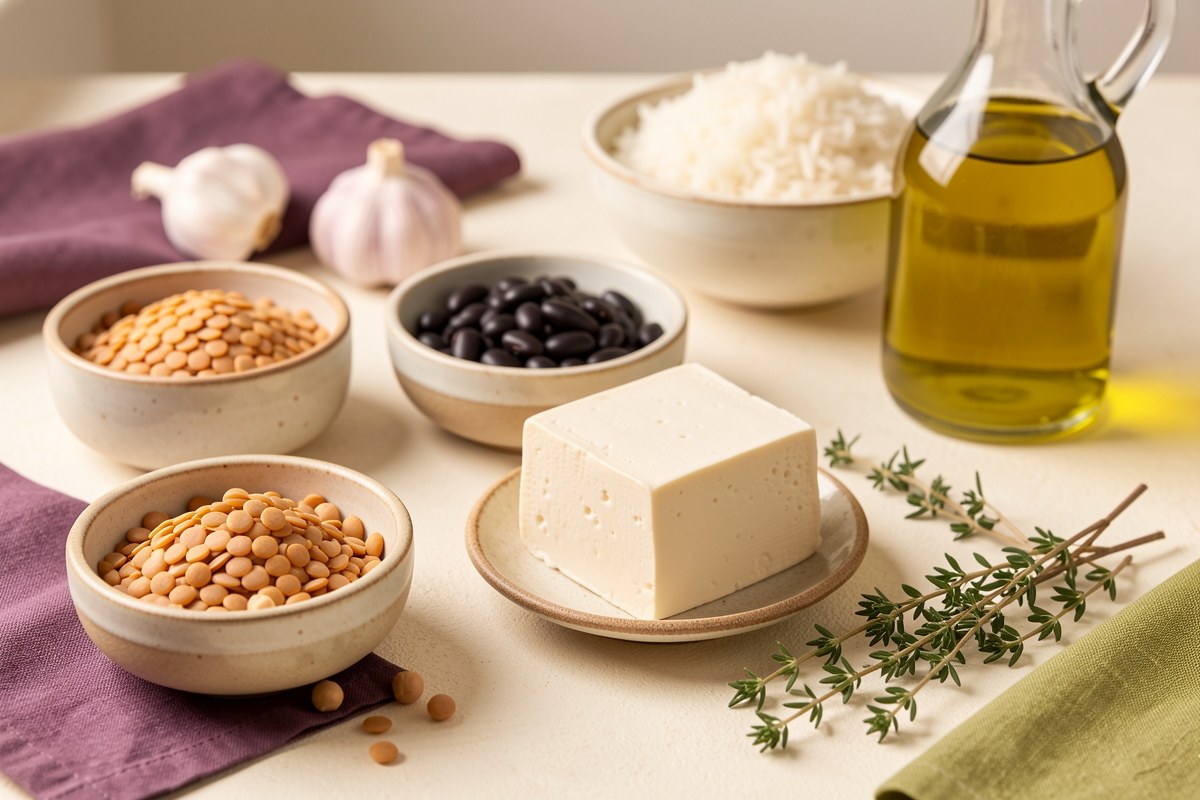
Pantry proteins: beans, lentils, tofu, tempeh, dairy and eggs
Protein is the anchor of a filling vegetarian dinner. Common vegetarian protein sources include legumes such as beans and lentils, nuts and seeds, and plant-based options like tofu, tempeh, and edamame. Dairy and eggs also appear in many vegetarian dinner ideas, though vegan cooks will skip those and lean on plant proteins instead.
Beans and lentils are among the most practical staples. They can be bought canned for immediate use or dried for lower cost with a longer cooking time. Canned beans are ready to drain and add to soups, stews, and grain bowls. Dried beans and lentils require soaking or simmering, so they suit nights when you have more time or a slow cooker.
- Canned beans: chickpeas, black beans, kidney beans, cannellini, pinto
- Dried beans: same varieties, plus black-eyed peas and split peas
- Lentils: brown, green, red, and French lentils
- Tofu: firm or extra-firm for pan-frying, silken for blending
- Tempeh: fermented soybean cake, sliceable and sturdy
- Edamame: shelled or in pods, often frozen
- Dairy: Greek yogurt, cottage cheese, paneer, and firm cheeses
- Eggs: for frittatas, quiches, and breakfast-for-dinner
Sources: Discover Real Food in Texas, 101 Cookbooks, The Stingy Vegan, Food52, Cozy Peach Kitchen
Vegetables that work in quick vegetarian dinners
Vegetables add volume, color, and nutrients to vegetarian dinners. For weeknight speed, choose vegetables that cook quickly or require little prep. Fresh produce like onions, garlic, potatoes, sweet potatoes, and winter squash can be stored outside the refrigerator in a cool, dark place for weeks to months, making them easy to keep on hand.
Frozen and canned vegetables are workable substitutes for fresh vegetables and can be faster when time is short. Frozen spinach, peas, corn, and mixed vegetables can go straight into soups, curries, and pasta dishes. Canned tomatoes and tomato sauce are treated as essential dinner-building ingredients in vegetarian pantry lists.
- Quick-cooking fresh: zucchini, bell peppers, broccoli florets, spinach, mushrooms
- Storage vegetables: onions, garlic, potatoes, sweet potatoes, winter squash
- Frozen: peas, corn, spinach, edamame, mixed vegetables
- Canned: diced tomatoes, tomato sauce, tomato paste, artichoke hearts, roasted red peppers
- Hearty greens: kale, collards, and Swiss chard (stems removed, leaves sliced)
Sources: Discover Real Food in Texas, Cozy Peach Kitchen, The Stingy Vegan
Grains, pasta and noodles for dinner bases
Whole grains such as brown rice, quinoa, and whole wheat pasta serve as dinner bases that add fullness to vegetarian meals. They can be cooked in bulk and refrigerated for quick assembly during the week. Pasta and noodles are versatile: they pair with tomato sauces, pestos, or simple garlic and oil.
For variety, keep a few different grains and shapes on hand. Short pasta like penne or rotini holds chunky vegetable sauces well, while long pasta like spaghetti or linguine works with lighter sauces. Noodles such as soba, rice noodles, or udon can turn a stir-fry or broth into a filling dinner.
- Rice: brown, white, jasmine, basmati
- Other grains: quinoa, farro, barley, millet, bulgur
- Pasta: whole wheat or regular, short and long shapes
- Noodles: soba, rice noodles, udon, ramen (check labels for vegan)
- Bread: whole-grain tortillas, pita, or sandwich bread for quick meals
Sources: Discover Real Food in Texas, Dietitian Jenn, The Stingy Vegan
Flavor builders: sauces, spices, acids and aromatics
A selection of spices, herbs, oils, vinegar, soy sauce, sriracha, peanut butter, and tahini is treated as a core flavor-building layer in a vegetarian pantry. These ingredients turn simple beans and grains into dinners with character. Vegetable broth is a commonly recommended pantry item for vegetarian soups, stews, and chilis.
Acids like lemon juice, lime juice, and vinegars brighten rich dishes. Aromatics like onion, garlic, and ginger form the base of many quick dinners. Keep a few sauces on hand—soy sauce, tamari, coconut aminos, or a favorite chili sauce—to adjust seasoning at the end.
- Oils: olive, canola, sesame, coconut
- Vinegars: balsamic, apple cider, red wine, rice
- Sauces: soy sauce or tamari, sriracha, peanut butter, tahini, mustard
- Spices: cumin, coriander, smoked paprika, chili powder, turmeric, oregano, thyme
- Aromatics: onions, garlic, ginger, shallots, scallions
- Acids: lemon juice, lime juice, vinegar
- Broth: vegetable broth or bouillon cubes
Sources: Discover Real Food in Texas, The Stingy Vegan
Storage and shelf-life overview
Proper storage keeps ingredients fresh and makes weeknight cooking easier. Canned goods, dry grains, pasta, potatoes, and winter squash keep for weeks or months in a cool, dark place, while frozen vegetables remain in the freezer. Nuts and seeds should be kept refrigerated to maintain freshness, according to a pantry guide.
Dried beans and lentils are shelf-stable and can be stored for extended periods; keep them in airtight containers in a cool, dark place and check for moisture or pests. Older dried beans may take longer to cook. Always check package dates and follow manufacturer guidance. Refrigerate unopened tofu, seitan, and tempeh and use promptly after opening.
Fresh produce such as potatoes, sweet potato, onion, garlic, and squash can be stored outside the refrigerator in a cool, dark place for weeks to months.
| Ingredient category | Storage location | Notes |
|---|---|---|
| Canned goods | Pantry, cool and dark | Check expiration dates; once opened, refrigerate and use within a few days. |
| Dry grains and pasta | Pantry, airtight container | Keep away from moisture and pests. |
| Dried beans and lentils | Pantry, airtight container | Store in a cool, dark place; check for moisture or pests. Older beans may take longer to cook. |
| Nuts and seeds | Refrigerator | Refrigeration helps maintain freshness. |
| Tofu, seitan, tempeh (unopened) | Refrigerator | Check package dates and follow manufacturer guidance; use promptly after opening. |
| Frozen vegetables | Freezer | Can be used directly in cooked dishes. |
| Potatoes, sweet potatoes, onions, garlic, winter squash | Cool, dark place | Store for weeks to months; keep away from light and moisture. |
| Fresh leafy greens and herbs | Refrigerator | Wrap in damp cloth or store in a container to prolong crispness. |
Sources: The Stingy Vegan, Discover Real Food in Texas
Substitution basics for common ingredients
Substituting similar beans, grains, or legumes for what is on hand is an acceptable practice when cooking pantry-based vegetarian meals. If a recipe calls for black beans but you have pinto beans, the dish will still work. The same applies to grains: quinoa can stand in for rice, and farro for barley.
Frozen and canned vegetables are presented as workable substitutes for fresh vegetables in vegetarian pantry cooking. For example, frozen spinach can replace fresh in soups and curries; canned tomatoes can replace fresh in sauces and stews. When substituting, adjust cooking time and liquid as needed because different forms release different amounts of moisture.
- Beans: any canned or cooked bean can usually replace another in soups, stews, and bowls.
- Lentils: brown or green lentils hold shape; red lentils break down and thicken soups.
- Grains: use similar textures—fluffy grains like rice and quinoa; chewy grains like farro and barley.
- Tofu: firm or extra-firm tofu can be replaced with tempeh or seitan in many stir-fries and scrambles.
- Vegetables: frozen or canned can replace fresh; adjust cooking time and liquid.
- Acids: lemon juice, lime juice, and vinegars can often be swapped for one another.
- Broth: vegetable broth can be replaced with water plus a bouillon cube or a splash of soy sauce.
Sources: The Stingy Vegan, Cozy Peach Kitchen, Discover Real Food in Texas
Frequently asked questions
What are the best vegetarian protein sources for dinner?
Common vegetarian protein sources for dinner include legumes such as beans and lentils, nuts and seeds, and plant-based options like tofu, tempeh, and edamame. Dairy and eggs are also used in vegetarian cooking, though vegan cooks will choose plant proteins. Canned beans and lentils are convenient for quick meals, while dried beans and lentils are more economical but take longer to cook.
Sources: Discover Real Food in Texas, 101 Cookbooks, Food52, Cozy Peach KitchenHow long do dried beans and lentils keep?
Dried beans and lentils are shelf-stable and can be stored for several months or years without going bad, according to a vegan pantry guide. For best quality, keep them in airtight containers in a cool, dark place and check for signs of moisture or pests. Older dried beans may take longer to cook and can lose some tenderness.
Sources: The Stingy VeganWhat can I substitute for tofu in a vegetarian dinner?
Tempeh or seitan can often substitute for tofu in stir-fries, scrambles, and other dishes where a firm, sliceable protein is needed. If you want a soy-free option, consider chickpea flour-based preparations or large portobello mushrooms for texture. For creamy applications, silken tofu can sometimes be replaced with soaked cashews blended with water, though the result will differ.
Sources: The Stingy Vegan, Cozy Peach KitchenWhich pantry staples make vegetarian dinners taste filling?
Grains such as brown rice, quinoa, and whole wheat pasta add fullness to vegetarian meals, according to vegetarian pantry guides. Combining them with protein-rich ingredients like beans, lentils, tofu, or tempeh creates a more satisfying dinner. Healthy fats from nuts, seeds, olive oil, and tahini also contribute to a filling meal, as do flavorful sauces and spices that make the dish enjoyable.
Sources: Discover Real Food in Texas, Dietitian Jenn, The Stingy VeganSources
- Wholesome and Flavorful: Pantry-Friendly Vegetarian Meals for Every Palate — Discover Real Food in Texas
- Vegetarian Pantry Staples for Quick, Flavorful, and Nutritious Meals — Dietitian Jenn
- 33 Best Plant-Based Diet Recipes - Easy Vegan Dinner Ideas — Food52
- 30 Vegetarian Pantry Staple Recipes — Cozy Peach Kitchen
- 50+ Vegetarian Dinner Recipes — 101 Cookbooks
- 60+ Vegan Pantry Recipes - The Stingy Vegan — The Stingy Vegan