What makes a soup dinner-worthy
A soup earns a place as the main course when it has more than broth and aromatics. The collections that vegetarian cooks return to again and again tend to share the same structure: a protein-bearing ingredient such as beans, lentils, chickpeas or tofu, a source of body such as pureed vegetables, coconut milk or a stirred-in dairy, and something to chew on, whether that is a grain, a noodle, a dumpling or a generous topping.
Protein is the most common missing piece in a vegetable soup that leaves you hungry an hour later. Red lentils are a favorite because they break down as they cook, thickening the pot while adding substance. Chickpeas hold their shape and work in brothy soups where you want bite. Tofu soaks up the seasoned broth around it. In each case the ingredient does two jobs at once, feeding you and improving the texture of the soup.
- Start with a protein: beans, lentils, chickpeas, tofu or egg noodles appear in the soups that eat like a meal.
- Build body: pureed vegetables, coconut milk, white beans or a spoonful of yogurt stirred in at the end.
- Add something to chew: grains, pasta, noodles, dumplings or a piled-high topping.
- Taste at the end: soups that sit for a day often need acid, salt or an herb refresh before serving.
Sources: The Kitchn, 101 Cookbooks, Vegetarian 'Ventures, Pinch of Yum, Food52
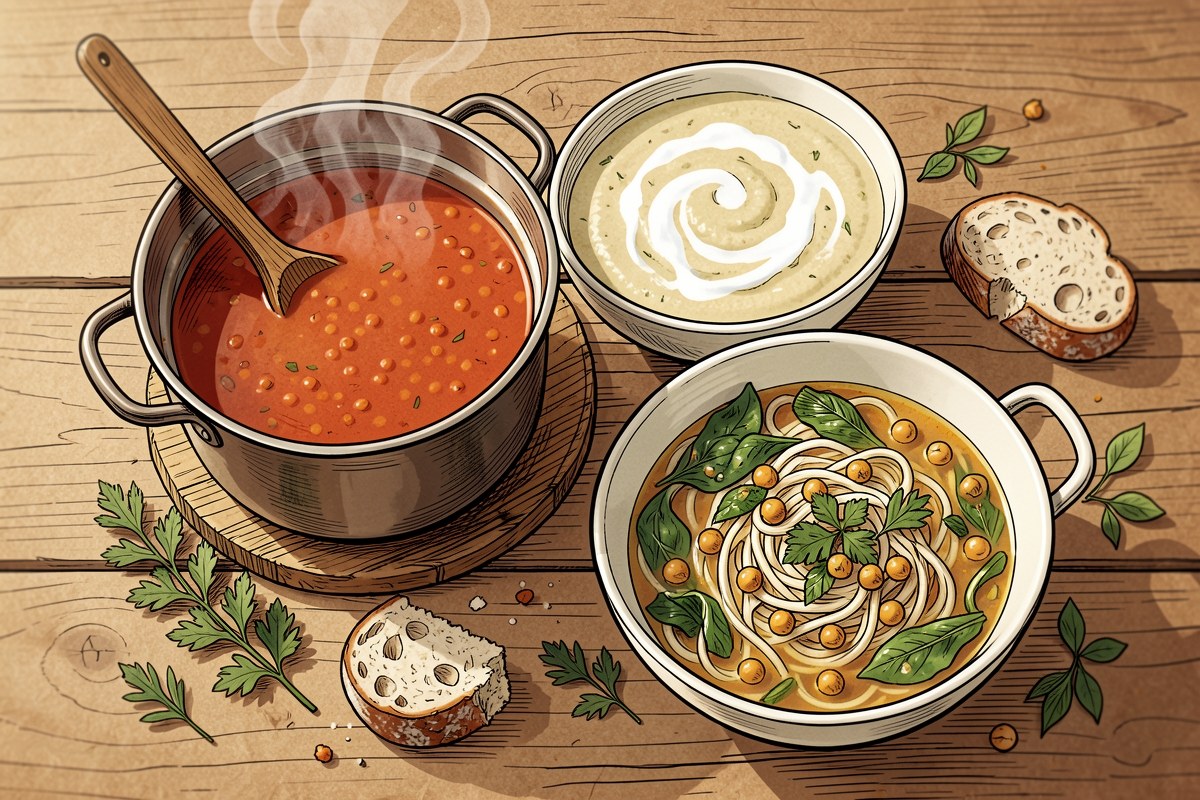
Bean and lentil soups
This is the most reliable category for a soup that fills you up. Bean and lentil soups are described in vegetarian dinner collections as thick, protein-rich and satisfying enough to serve as the main event. A red lentil soup is the classic example: the lentils cook down into a hearty base, which means you get a pot that feels substantial without any thickener.
Chickpeas take a different route. Instead of melting into the broth, they stay whole and give the soup a chewy, meaty presence. Vegetarian collections pair chickpeas with broth, vegetables, pasta or noodles to make soups that are explicitly described as hearty and filling. A chickpea tomato minestrone and a chickpea noodle soup both follow that pattern.
- Red lentil soup: lentils break down into a thick, hearty base that tastes like a full meal.
- Coconut red lentil soup: a popular lentil soup with a creamy coconut broth.
- Chickpea tomato minestrone: chickpeas, tomatoes and pasta make a filling bowl often described as hearty.
- Chickpea noodle soup: chickpeas and root vegetables stand in for the chicken in a familiar noodle soup.
- Pinto bean soup with cornmeal white cheddar dumplings: a bean soup made substantial with dumplings.
Sources: The Kitchn, 101 Cookbooks, Vegetarian 'Ventures, Pinch of Yum, Food52
Vegetable and grain soups
Grain-based soups sit in the middle ground between a brothy vegetable soup and a stew. A butternut squash farro minestrone, for example, is described as a perfect cool-weather vegetarian main that also works for leftovers, which is the real test of a dinner soup. Farro keeps its chew even after the soup sits, so the texture holds up better than pasta would.
The convenience side of this category matters too. An Instant Pot vegetable soup with farro is described as hearty and ready in under thirty minutes, which makes it a realistic weeknight option rather than a weekend project. The formula is flexible: swap the grain, keep the vegetable base and adjust the broth to the consistency you want.
- Butternut squash farro minestrone: a cool-weather main that holds up as leftovers.
- Instant Pot vegetable soup with farro: a hearty soup described as ready in under thirty minutes.
- Cook grains separately if you plan to store the soup, so they do not drink all the broth.
- Add a handful of greens at the end for color and a little extra body in the bowl.
Sources: Vegetarian 'Ventures
Creamy vegetarian soups
Creamy does not have to mean cream. In the vegetarian soup collections reviewed here, the creamy texture comes from pureed vegetables, coconut milk, white beans, or a dairy such as Greek yogurt stirred in right before serving. That range gives you options depending on what you have and how rich you want the finished bowl.
A loaded baked potato and cauliflower soup and a spiced carrot soup with a green tahini swirl are both examples of vegetable-based creamy soups. Food52 lists a cream of broccoli soup with Greek yogurt stirred in before serving, a vegan tomato soup, and a creamy celery soup, showing that the category stretches well beyond the familiar potato-and-cream version.
- Pureed vegetables: cauliflower, potato, carrot and squash all blend into a silky base.
- Coconut milk: gives a creamy texture and a distinct flavor that suits curries and Thai-style soups.
- White beans: blend into the broth for body without dairy.
- Stirred-in dairy: Greek yogurt added off the heat keeps its tang and thickens the pot.
- A swirl or drizzle on top adds contrast to a smooth, single-color soup.
Sources: Vegetarian 'Ventures, Food52
Noodle and dumpling soups
Noodles and dumplings are the most direct way to turn a broth into dinner. They add the chew and bulk that a plain vegetable soup lacks, and they carry the flavors of the broth with them. Food52 lists a chickpea noodle soup as a vegetarian-friendly substitute for chicken noodle soup, using chickpeas and root vegetables in place of shredded chicken.
The category is broader than that one swap. Food52's collection also includes a smoky minestrone with tortellini and pesto and a winter noodle soup with coffee-roasted squash, while Vegetarian 'Ventures lists a pinto bean soup topped with cornmeal white cheddar dumplings. Each one uses a different starch to make the soup substantial, which is the point: the noodle or dumpling is not a garnish, it is the part that makes the bowl a meal.
- Chickpea noodle soup: chickpeas and root vegetables replace the chicken in a familiar format.
- Smoky minestrone with tortellini and pesto: pasta and pesto turn minestrone into a main course.
- Winter noodle soup with coffee-roasted squash: a cold-weather option built on noodles and squash.
- Pinto bean soup with cornmeal white cheddar dumplings: dumplings add both bulk and texture.
- Cook noodles separately when you can, so they stay firm and the broth stays brothy.
Sources: Vegetarian 'Ventures, Food52
Toppings and sides that complete the meal
The topping is often what separates a good soup from a satisfying dinner. Across the vegetarian soup collections reviewed here, the garnishes that show up most are fresh herbs, scallions, coconut bacon, tortilla strips, croutons, cheese, pesto, jalapeño corn fritters and roasted chickpeas. Each of those is tied to a specific recipe in those collections rather than offered as a general rule, but the pattern is consistent: a topping adds texture, richness or a hit of protein that the broth alone does not provide.
Sides do similar work. Vegetarian 'Ventures notes that a sweet potato, lime and peanut soup pairs beautifully with a fresh baguette, and The Kitchn describes a butternut squash and chickpea soup as pairing well with steamed rice or naan. Pinch of Yum describes a Thai coconut soup with tofu and rice as a savory coconut broth with flavor-soaked tofu and a pile of steamy rice, which makes the rice part of the dish rather than an afterthought. Bread for dipping and a grain alongside are the two most common ways the collections turn a bowl of soup into a full dinner.
- Texture: croutons, tortilla strips, coconut bacon or roasted chickpeas.
- Freshness: chopped herbs, scallions or a squeeze of lime at the table.
- Richness: cheese, pesto or a swirl of yogurt or tahini.
- Bread: a baguette or naan for dipping, named alongside specific soups in the collections.
- Grain: steamed rice served with or under the soup, as in a Thai coconut soup with tofu and rice.
- Something with protein: maple roasted chickpeas are described as bringing extra texture and protein to a curried carrot soup.
Sources: The Kitchn, Vegetarian 'Ventures, Pinch of Yum, Food52
Storage and reheating notes
The soups in this collection generally reheat well, and several are explicitly recommended for leftovers. The butternut squash farro minestrone is described as working for leftovers, which is a useful signal that grain-based soups hold up after a day in the refrigerator.
Two practical adjustments make leftovers better. First, if you are cooking a noodle, dumpling or pasta soup specifically for storage, keep the starch separate and add it when you reheat, so it does not soften into the broth. Second, taste before serving. A soup that sat overnight often needs a little salt, acid or a fresh herb scattered on top to taste like it did on the first night.
- Store the soup and the noodle, dumpling or grain separately when you can.
- Reheat gently on the stovetop, stirring so the bottom does not catch.
- Taste after reheating and adjust salt, acid or herbs before serving.
- Creamy soups made with dairy are best reheated gently and stirred well.
Sources: Vegetarian 'Ventures
Frequently asked questions
How do I make a vegetarian soup more filling?
Add a protein-bearing ingredient and something to chew. Beans, lentils, chickpeas and tofu all appear in vegetarian soups that are described as hearty and satisfying as a main course. Alongside the protein, add a grain, noodle, dumpling or a generous topping such as roasted chickpeas. The combination is what turns a brothy vegetable soup into a dinner.
Sources: The Kitchn, 101 Cookbooks, Vegetarian 'Ventures, Pinch of Yum, Food52What can I serve with vegetarian soup to make a full dinner?
Bread and grains are the most common accompaniments in the vegetarian soup collections reviewed here. A fresh baguette is named as a pairing for a sweet potato, lime and peanut soup, and steamed rice or naan is suggested alongside a butternut squash and chickpea soup. A Thai coconut soup with tofu and rice is described with a pile of steamy rice as part of the dish. Toppings such as herbs, cheese, pesto, croutons or roasted chickpeas can also round out the bowl.
Sources: The Kitchn, Vegetarian 'Ventures, Pinch of YumWhich soups are best for meal prep?
Grain-based soups tend to hold up best. A butternut squash farro minestrone is specifically described as a cool-weather vegetarian main that works for leftovers. Bean and lentil soups are also strong candidates because the lentils continue to thicken the pot as it sits. For noodle and dumpling soups, store the starch separately and add it when you reheat so it does not soften into the broth.
Sources: Vegetarian 'VenturesSources
- 40 Incredibly Delicious Vegetarian Dinner Ideas - The Kitchn — The Kitchn
- 50+ Vegetarian Dinner Recipes — 101 Cookbooks
- 12 Vegetarian Soup Recipes - Vegetarian 'Ventures — Vegetarian 'Ventures
- 45 Actually Delicious Vegetarian Dinner Recipes - Pinch of Yum — Pinch of Yum
- 33 Best Vegetarian Soup Recipes for Cold Weather Cooking — Food52