How to choose a dinner idea
Most weeknight dinner decisions stall for the same reason: you start with an ingredient instead of a mood. A better first question is what kind of meal sounds good right now. Something saucy and slurpable? A warm bowl you can eat with a spoon? A pile of roasted vegetables with a crisp edge? Answering that narrows a hundred recipes down to a handful.
From there, two practical filters do the rest. The first is time: how long until you want to be eating, and how much of that time do you want to spend standing at the stove. The second is what is already in your kitchen, especially the protein and the base. A vegetarian dinner is easiest to assemble when one component is a base (pasta, rice, tortillas, noodles) and another is a satisfying plant protein (beans, lentils, tofu, tempeh, eggs, or dairy for vegetarians who eat them).
- Craving something saucy: pasta, curry, or a one-pot soup.
- Craving something fresh and crunchy: wraps, tacos, or a grain bowl with raw vegetables.
- Craving comfort: casseroles, stuffed shells, pot pie, or a rich bean chili.
- Short on time: sheet pan dinners, stir-fries, and quick sauces that come together fast.
- Cooking for a mixed-diet household: build a base everyone eats, then let people add their own toppings.
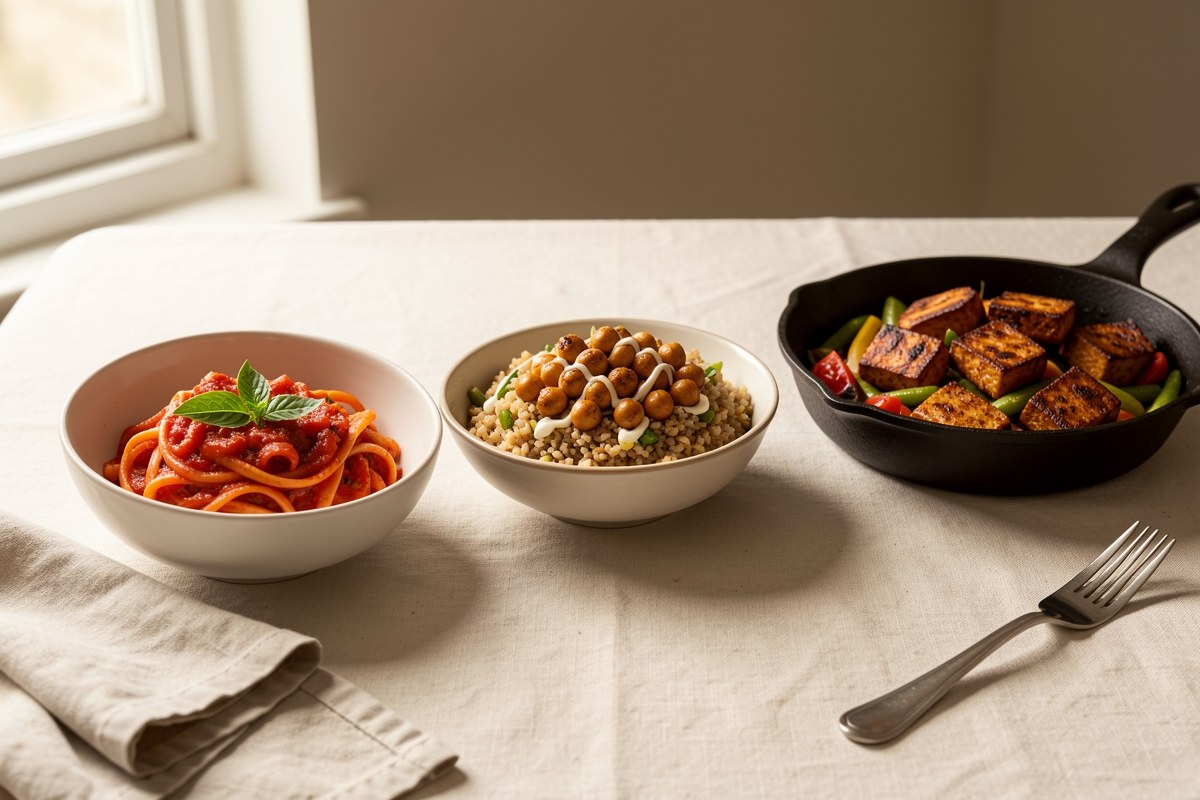
Pasta and noodle dinners
Pasta is the most forgiving entry point into vegetarian cooking because the base is neutral and the sauce does the work. A quick sauce of garlic, olive oil, tomatoes, and a pinch of chili flakes can be on the table faster than the water boils. Vegetable-loaded pasta dishes are also one of the most commonly reached-for vegetarian dinners, which means there is no shortage of variations to borrow from.
Noodles deserve equal billing. A stir-fry with noodles and edamame is a fast, filling option that leans on whatever vegetables are in the fridge, and it is easy to adjust for however many people are eating. If you want a weekend feel on a weeknight, baked pasta or stuffed shells deliver it with very little active time.
- Quick sauces: tomato and garlic, lemon and olive oil, or a simple cream sauce for vegetarians who eat dairy.
- Add-ins that add substance: chickpeas, white beans, ricotta, mozzarella, or a handful of frozen peas.
- Noodle route: stir-fried noodles with edamame and whatever vegetables need using up.
Sources: Grateful Grazer (Stephanie McKercher, RDN), Pinterest
Rice, grain, and bowl dinners
Grain bowls are less a recipe than a formula, which is exactly why they work on a night when nobody wants to follow instructions. Start with a cooked grain, add a protein, pile on vegetables, and finish with a sauce that ties it together. Coconut curry over rice, a sweet potato and lentil curry, or a chickpea bowl with tahini sauce all follow that same shape.
Bowls are also the easiest place to stretch a small amount of cooking across several meals. Grains and roasted vegetables keep well, so a pot of rice on Sunday can become two or three different dinners with a change of sauce and topping.
- Grain options: rice, quinoa, farro, or any cooked grain you already have.
- Protein options: chickpeas, lentils, tofu, tempeh, or a fried egg for vegetarians who eat eggs.
- Sauce options: tahini, yogurt-based sauces, coconut curry, or a simple vinaigrette.
Bean and lentil dinners
Beans and lentils are the backbone of a meatless kitchen because they are sturdy, inexpensive, and satisfying in a way that vegetables alone rarely are. Three-bean chili, lentil soup, and Tuscan white bean soup are all examples of vegetarian mains built this way, and they are often described as rich in protein and fiber.
These dinners also scale well. A pot of chili or a lentil curry usually tastes better the next day, which means one cooking session can cover dinner and a lunch or two. If you are feeding a mixed-diet household, a bean-based main with toppings on the side lets everyone build the plate they want.
- Chili with cornbread and avocado for a heartier plate.
- Lentil curry over rice for a one-pot, spoon-friendly dinner.
- White bean soup with greens and crusty bread for a lighter night.
Tofu and tempeh dinners
Tofu and tempeh are the most flexible proteins in a vegetarian kitchen once you get the texture right. Crispy tofu wraps with fresh vegetables and a green goddess sauce are a good example of how a simple preparation can carry a whole meal. Tempeh, with its firmer, nuttier character, works especially well in dishes where you want something that holds its shape, such as a shepherd's pie built with beans and tempeh.
The main technique to learn is drying and browning. Press tofu briefly, cut it into pieces that will actually brown, and give it room in the pan. From there, the sauce decides the direction: sticky and sweet, spicy, or herby and green.
- Crispy tofu wraps with fresh vegetables and a green sauce.
- Tempeh and bean shepherd's pie for a cooler-weather dinner.
- Stir-fries where tofu or tempeh replaces the meat without changing the method.
Vegetable-forward dinners
Some nights the vegetables should be the point, not the supporting act. Sheet pan dinners are the simplest version: chickpeas and chopped vegetables roasted together, finished with a drizzle of tahini sauce. A vegetable pot pie or a cauliflower-based dish can carry a whole meal the same way, especially when paired with something starchy on the side.
The trick with vegetable-forward dinners is to give the vegetables enough fat, salt, and heat to taste like a main course rather than a side. Roasting at a high temperature, using a generous glug of oil, and finishing with something acidic or creamy usually does it.
- Chickpea sheet pan dinner with tahini sauce.
- Vegetable pot pie for a cozy, slower evening.
- Cauliflower rice or roasted cauliflower as a base for a heartier topping.
Sources: Grateful Grazer (Stephanie McKercher, RDN), A News (anews.com.tr)
Weekend-worthy vegetarian dinners
When there is more time, the vegetarian dinners worth the effort tend to be the ones that feel like an occasion: vegetarian lasagna, spinach and ricotta stuffed shells, a coconut curry, or a tikka masala. These are also the dishes that produce the best leftovers, so a Saturday effort can quietly cover a couple of weeknights.
If you are cooking for company, a mixed-diet table is easy to handle when the main dish is naturally meatless and the sides are generous. A baked pasta, a curry with rice, or a casserole with a crisp topping all read as a proper dinner rather than a substitution.
- Vegetarian lasagna or stuffed shells for a baked, crowd-friendly main.
- Coconut curry or tikka masala with rice and flatbread.
- Dump-and-bake casseroles and stuffed peppers for hands-off cooking.
Sources: Grateful Grazer (Stephanie McKercher, RDN), Pinterest
Making a vegetarian dinner more filling
A vegetarian dinner stops feeling like a light meal when it has enough protein, enough fiber, and enough fat to carry the flavor. Beans, lentils, tofu, eggs, tempeh, and grains such as whole wheat pasta or farro are all practical places to add substance. Pairing a quick meal with a side salad and a cooked grain is one simple way to make a fast dinner go further.
Portions are personal, and there is no single correct serving size for a vegetarian main. A reasonable approach is to build the plate so that the protein component is a real portion rather than a garnish, and to keep a second helping of the base within reach. If you are cooking for people with different appetites, serve the components separately so each person can adjust.
- Add a protein that holds its own: beans, lentils, tofu, tempeh, eggs, or cheese.
- Add a grain or starch so the meal has staying power.
- Pair quick meals with a side salad or cooked grains for extra bulk.
Frequently asked questions
What vegetarian dinner works for a mixed-diet household?
The easiest approach is a dinner where the meatless version is the default rather than the alternative. Baked pasta, stuffed shells, a bean chili with toppings on the side, or a curry served over rice all work because nobody is eating a separate meal. Set out the protein and the sauce separately where you can, and let each person build the plate they want.
Sources: Grateful Grazer (Stephanie McKercher, RDN)Which vegetarian dinners use pantry staples?
Pasta with a quick sauce, bean chili, lentil soup, and grain bowls are the most reliable pantry dinners. They lean on dry or canned beans, lentils, pasta or rice, canned tomatoes, and whatever vegetables or aromatics you have on hand. Keeping one or two sauces, such as tahini or a jar of curry paste, makes these meals come together with very little shopping.
Sources: Grateful Grazer (Stephanie McKercher, RDN)How can I make a vegetarian dinner more filling?
Build the meal around a real protein portion rather than treating beans, tofu, or lentils as a garnish, and add a grain or starch alongside it. Pairing a quick meal with a side salad or cooked grains is a straightforward way to add bulk. Fat and acid matter too, so a tahini drizzle, a yogurt sauce, or a squeeze of lemon will make the same ingredients eat like a fuller meal.
Sources: Grateful Grazer (Stephanie McKercher, RDN)Sources
- 60 Easy and Filling Vegetarian Dinner Recipes | Grateful Grazer — Grateful Grazer (Stephanie McKercher, RDN)
- Delicious vegetarian menu ideas for a stylish dinner table — A News (anews.com.tr)
- Vegetarian Dinner Ideas — Pinterest