What changes when a vegetarian dinner becomes vegan
A vegetarian dinner usually contains no meat, poultry or fish, but it may still include eggs, dairy, honey or other animal-derived ingredients. A vegan dinner removes all of those. That means the adjustments are usually about the supporting ingredients: the cheese on top, the egg that binds a patty, the cream that thickens a soup or the mayonnaise in a dressing.
The good news is that most vegetarian dinner recipes already have a plant-based backbone: vegetables, beans, lentils, grains, pasta, tofu, tempeh or seitan. When you adapt one to vegan, you are mostly solving for richness, binding and flavor. In many dishes, a single swap is enough, and in others you may adjust two or three components.
- Eggs often act as a binder, a leavener or a creamy element. Replace them with aquafaba, flax or chia eggs, silken tofu or mashed banana depending on the job.
- Dairy provides fat, tang and melt. Replace it with creamy plant-based components such as cashew cream, or use nutritional yeast for a savory note, depending on the dish.
- Honey is an animal product. Use maple syrup, agave or another plant-based sweetener when a recipe calls for honey.
- Hidden animal ingredients can appear in condiments and sauces such as mayonnaise, Worcestershire sauce and some pestos. Check labels or choose a version that is labeled vegan.
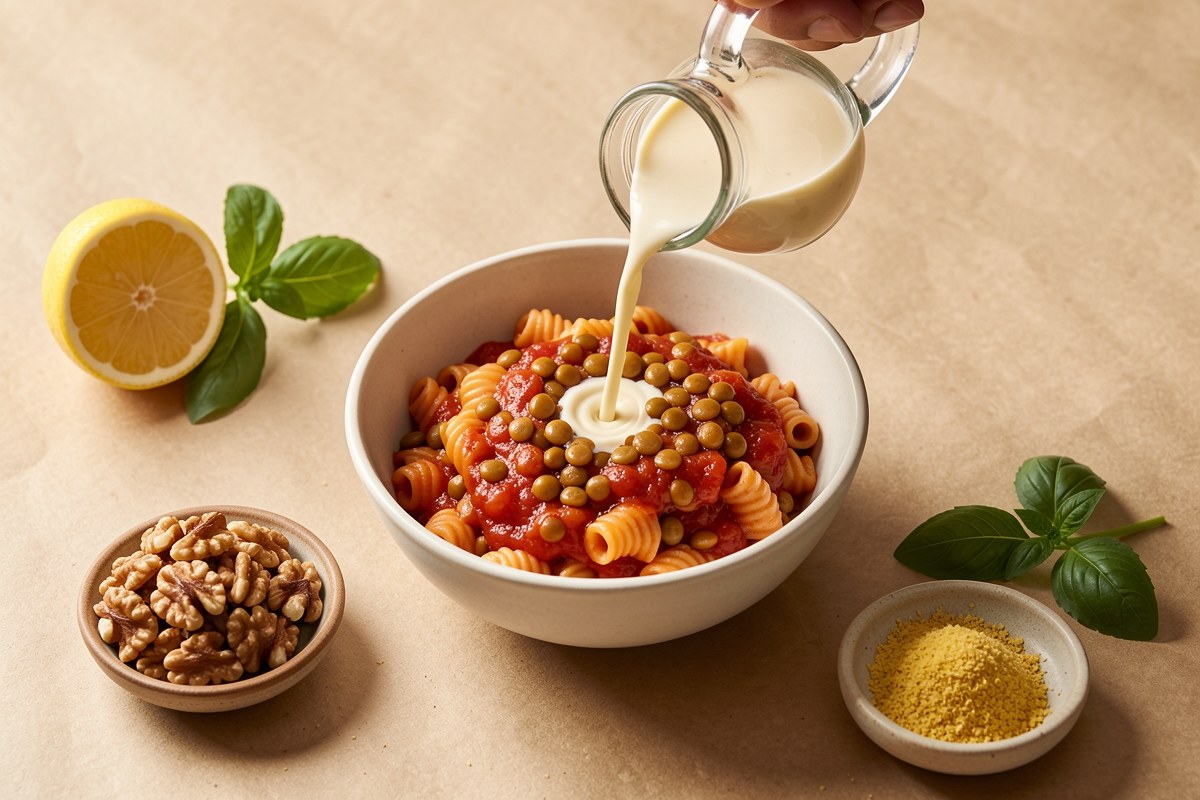
egg swaps that work
Egg substitutes are the most thoroughly documented part of vegan adaptation, and the ratios are worth memorizing. Aquafaba, the liquid from a can of chickpeas, can replace egg parts: 1 tablespoon for one egg yolk, 2 tablespoons for one egg white and 3 tablespoons for one whole egg. It also whips like egg whites and is used in meringues, macarons, buttercream and souffle.
For binding, a flax egg is 1 tablespoon of ground flaxseed mixed with 3 tablespoons of water, left to sit until thick and goopy. A chia egg uses 1 tablespoon of chia seeds plus 3 tablespoons of water for about one egg and is ideal where a gel texture helps and no rising is needed. Silken tofu works at 1/4 cup per egg for dense, moist or savory recipes such as vegan cheesecakes, puddings and mousses. Half a mashed banana can also bind muffins or pancakes.
For cooking, Veganuary recommends pressing tofu first, then scrambling it with spices, vegetables and vegan cheese, preferring extra firm tofu. Store-bought vegan egg replacers for baking include Ener-G Egg Replacer, The Neat Egg, Bob’s Red Mill Egg Replacer, Orgran No Egg and Simple Truth Plant-Based Egg Replacer. Simple Truth’s version is made from chia seeds and garbanzo beans and is intended as a binder.
Mayonnaise is a common hidden egg product. Veganuary lists plant-based mayonnaise brands to look for, including Chosen Foods, Follow Your Heart, Hellmann’s/Best Foods, Primal Kitchen, Simple Truth and Sir Kensington’s, but warns that some of these are not fully vegan companies and that labels should be checked because some items may contain ingredients from animals.
Sources: Veganuary
Creamy dairy-free techniques that work
For dairy-rich components such as cream, cheese and ranch-style dressings, the Food52 vegan recipe descriptions offer specific, tested patterns. Vegan penne vodka replaces the cream with cashew cream. Vegan mac and cheese uses soaked cashews, cannellini beans, ground turmeric, white miso and nutritional yeast to create a cheddar-like flavor. A Buffalo chickpea salad with vegan ranch uses cashews for creaminess and lemon juice for tang.
These same techniques work in many vegetarian recipes. If a soup or sauce calls for cream, blend soaked cashews with a little water or broth and stir that in at the end. If a dish needs a Parmesan-like finish, use a cashew Parmesan, as in the Food52 lentil bolognese. If a recipe needs a cheesy pesto, replace the cheese with walnuts and nutritional yeast, as in the Food52 simple vegan pesto.
These are starting points. The exact quantity of cashews or nutritional yeast depends on the recipe and your taste, so adjust gradually and taste as you go.
- Cashew cream: blend soaked raw cashews with water or broth until smooth; use in creamy pasta sauces and soups.
- Cashew Parmesan: blend cashews with nutritional yeast and salt for a Parmesan-style topping.
- Nutritional yeast: adds a savory, cheesy note to sauces, soups and toppings.
- White miso: brings deep umami to dressings, sauces and soups.
- Lemon juice and vinegar: add brightness that cuts through rich ingredients.
Sources: Food52
Protein sources for vegan dinners
Vegetarian dinners often rely on eggs, cheese or yogurt for protein. When you remove those, you can build the meal around plant proteins that also carry flavor and texture. Veganuary specifically names tofu as a vegan egg substitute for cooking and recommends extra firm tofu for scrambling. Food52’s vegan dinner roundup includes chickpeas in a Buffalo chickpea salad, lentils and mushrooms in a lentil bolognese, and cannellini beans in a vegan mac and cheese sauce.
You do not need to treat protein as a separate puzzle. If a recipe already uses beans, lentils, tofu or tempeh, keep them and increase the amount slightly if you are removing a protein-rich dairy or egg component. If the original recipe leaned on cheese or eggs as the main protein, add chickpeas, white beans, lentils, tofu, tempeh or seitan.
- Tofu: press and scramble for an egg-like texture, or cube and pan-fry for bowls.
- Chickpeas: roast or simmer for salads, curries and soups.
- Lentils: use in bolognese, soups and stews where they add body.
- Cannellini and other white beans: blend into creamy sauces or leave whole in soups.
- Tempeh and seitan: use in place of meat in stir-fries, sandwiches and sheet-pan dinners.
Vegan soups and bowls
Soups and bowls are natural vegan territory because they are built from vegetables, legumes, grains and broths. The main adaptation is usually the creamy element or the topping. If a vegetarian soup calls for cream or cheese, Food52’s vegan recipes show two approaches: cashew cream for a silky finish, and nutritional yeast or cashew Parmesan for a savory, cheesy note.
For bowls, the same logic applies. Start with a grain, add a protein such as chickpeas, tofu or lentils, pile on vegetables, then finish with a vegan sauce. Food52’s Buffalo chickpea salad with vegan ranch uses cashews for creaminess and lemon juice for tang, which is a useful pattern for any bowl dressing. Vegan pesto made with walnuts and nutritional yeast can also work as a bowl sauce.
- Creamy soup: blend soaked cashews with a little water or broth, then stir in at the end.
- Cheesy flavor: use nutritional yeast, white miso or a cashew-based Parmesan.
- Tangy dressing: blend cashews with lemon juice, vinegar and herbs.
- Hearty texture: add lentils, chickpeas or white beans instead of meat or eggs.
Flavor boosters without animal products
Flavor is where vegan dinners can shine or fall flat. The Food52 recipes show several umami-rich ingredients that do the work of cheese, anchovies or cream. White miso and nutritional yeast create a cheddar-like flavor in vegan mac and cheese. Black pepper carries a traditional vegan Caesar salad that omits anchovies, egg yolks and cheese. Red wine, tomato paste, chile flakes and herbs deepen a lentil bolognese. Walnuts and nutritional yeast replace cheese in a simple vegan pesto.
You can keep these boosters on hand so that adapting a vegetarian recipe is quick. Miso, nutritional yeast, tomato paste, good mustard, vinegar, citrus, smoked paprika and fresh herbs all add complexity without animal products. Toasted nuts and seeds add richness and crunch, and a drizzle of good olive oil can replace the mouthfeel of butter or cream in many dishes.
- Nutritional yeast: savory, cheesy notes for sauces, soups and popcorn.
- White miso: deep umami for dressings, sauces and soups.
- Cashews: blended into cream, ranch or Parmesan-style toppings.
- Black pepper, chile flakes and smoked paprika: heat and depth.
- Lemon juice and vinegar: brightness that cuts through rich ingredients.
- Fresh herbs and toasted nuts: freshness and texture.
Sources: Food52
Reading labels for hidden animal ingredients
Even a vegetarian recipe can contain animal-derived ingredients that are not obvious. Veganuary notes that eggs are a main ingredient in mayonnaise, so regular mayo is not vegan. It also warns that some mayonnaise brands it lists are not fully vegan companies and that labels should be checked because some items may contain ingredients from animals. This is not a reason to avoid those brands entirely; it is a reason to read the specific product label each time you buy.
Beyond mayonnaise, Worcestershire sauce often contains anchovies, and some pestos often contain Parmesan. Honey is an animal product, so use maple syrup or agave when a recipe calls for it. The practical habit is simple: when a recipe calls for a condiment, sauce or other prepared ingredient, check the ingredient list or choose a product that is labeled vegan.
- Mayonnaise: check for egg, and choose a vegan mayonnaise if needed.
- Worcestershire sauce: often contains anchovies; look for a vegan version.
- Pesto: often contains Parmesan; make your own with walnuts and nutritional yeast.
- Honey: replace with maple syrup, agave or another plant-based sweetener.
Sources: Veganuary
Sample vegan dinner week
This is a sample week of vegan dinner ideas built from the recipes and techniques described by Food52 and the egg substitution guidance from Veganuary. It is not a rigid plan; use it to see how easily vegetarian dinners can become vegan. Each day starts with a vegetarian-friendly base and uses a vegan swap.
The week assumes you are cooking for about four people and that you already have basic pantry items. Adjust portions to your household. If you are new to vegan cooking, start with the days that require only one swap, such as the soup or the bowl, and work up to the baked adaptations.
| Day | Dinner idea | Vegan swap or technique | Source basis |
|---|---|---|---|
| Monday | Lentil bolognese with pasta | Replace ground meat with lentils and mushrooms; finish with cashew Parmesan | Food52 lentil bolognese |
| Tuesday | Vegan mac and cheese | Use soaked cashews, cannellini beans, turmeric, white miso and nutritional yeast for cheddar-like flavor | Food52 vegan mac and cheese |
| Wednesday | Buffalo chickpea salad with vegan ranch | Use chickpeas instead of chicken; make ranch with cashews and lemon juice | Food52 Buffalo chickpea salad |
| Thursday | Vegan Caesar salad with chickpeas | Omit anchovies, egg yolks and cheese; rely on black pepper for Caesar-like flavor | Food52 traditional vegan Caesar salad |
| Friday | Penne vodka with cashew cream | Replace cream with cashew cream | Food52 penne vodka |
| Saturday | Tofu scramble with vegetables | Press extra firm tofu, scramble with spices and vegetables, add vegan cheese | Veganuary tofu |
| Sunday | Vegan pesto pasta with white beans | Make pesto with walnuts and nutritional yeast instead of cheese; add white beans for protein | Food52 simple vegan pesto |
Frequently asked questions
How do I replace cheese in a vegetarian dinner?
For a cheddar-like sauce, Food52 describes using soaked cashews, cannellini beans, ground turmeric, white miso and nutritional yeast. For a Parmesan-style topping, it uses a cashew Parmesan. For pesto, it replaces cheese with walnuts and nutritional yeast. These are starting points; you may need to adjust quantities to taste.
Sources: Food52What vegan protein works in soups and bowls?
Chickpeas, lentils, cannellini beans and tofu are all used in the Food52 vegan dinner recipes and work well in soups and bowls. Veganuary also recommends extra firm tofu for scrambling. You can add them to soups for body or use them as the main protein in a bowl. If a recipe already includes beans or lentils, you can increase the amount when removing a dairy or egg component.
Sources: Veganuary, Food52Is vegetarian always vegan?
No. A vegetarian dish can still contain eggs, dairy, honey or other animal-derived ingredients. Vegan dinners remove all of those. That means the adaptation usually involves replacing the egg, dairy, honey or hidden animal ingredients with plant-based alternatives. The backbone of the dish—vegetables, grains, beans, lentils or tofu—often stays the same.
Sources: Veganuary, Food52Which ingredients are surprisingly not vegan?
Mayonnaise is a common one because eggs are a main ingredient. Veganuary warns that some mayonnaise brands it lists are not fully vegan companies and that labels should be checked because some items may contain ingredients from animals. Worcestershire sauce often contains anchovies, and some pestos often contain Parmesan. Honey is an animal product. Check the label or choose a product that is labeled vegan.
Sources: Veganuary