The core vegetarian chili formula
Vegetarian chili is flexible, but a reliable pot follows a simple structure: aromatics, spices, a umami layer, beans or legumes, tomatoes, and enough liquid to simmer. Many tested recipes start by cooking onion and bell pepper in oil, then adding garlic and ground spices for about a minute before any liquid goes in. That brief bloom in hot oil wakes up chili powder, cumin, and smoked paprika so their flavor carries through the whole pot.
After the spices, add canned tomatoes, beans, and a liquid such as vegetable broth. A common stovetop simmer time is about 25 to 40 minutes when using canned beans and canned tomatoes. If you use dried beans, expect a much longer cook—about 1 to 1.5 hours after soaking—until the beans are fully tender.
You can make chili as mild or as smoky as you like. Fire-roasted canned tomatoes and chipotle peppers in adobo sauce are two common ways to add smoky depth, while a splash of vinegar or lime juice at the end brightens the whole pot.
- Start with onion and bell pepper in oil; add garlic and spices last so they bloom without burning.
- Use canned beans and canned tomatoes for a 25–40 minute simmer, or dried beans for a longer cook.
- Finish with acid—vinegar or lime juice—to sharpen the flavor.
- Let the chili rest a few minutes before serving so the texture thickens slightly.
Sources: Cookie and Kate, Love and Lemons, The Kitchn, Wyse Guide
Building umami and depth without meat
Meat often provides savory depth in traditional chili, but plant-based ingredients can do the same job. Soy sauce or tamari is a common addition: it adds saltiness and umami without much effort. A small amount of Marmite or Vegemite can also add richness, though it is a stronger, more acquired flavor—start with a teaspoon and adjust.
Smoked paprika is another workhorse. It gives a smoky note that mimics the effect of bacon or grilled meat. Some cooks also use chipotle peppers in adobo sauce for both smoke and heat. Fire-roasted diced tomatoes are another simple swap that adds a subtle smoky backbone.
Texture matters as much as flavor. Blending a portion of the chili and returning it to the pot creates a thicker, more cohesive body. Mashing some of the beans with a potato masher releases starch and thickens the cooking liquid. For extra body, you can pulse a can of chickpeas in a food processor and stir them in—this adds textural contrast that reads as hearty.
- Soy sauce or tamari adds umami and salt; add a tablespoon at a time and taste.
- Marmite or Vegemite can deepen flavor—use sparingly.
- Smoked paprika, chipotle in adobo, and fire-roasted tomatoes add smoky depth.
- Blend or mash part of the pot for a thicker, more chili-like consistency.
Sources: Cookie and Kate, Love and Lemons, Vancouver with Love, Serious Eats, The Kitchn
Bean and legume options
Almost any bean works in vegetarian chili. Black beans, kidney beans, pinto beans, cannellini beans, and chickpeas are all common choices. Black-eyed peas are another legume option that fits the same formula. If you want a thicker chili, pinto beans are a good pick because they break down slightly during simmering.
Canned beans are the quickest route: drain and rinse them, then add them with the tomatoes and broth. They are already cooked, so they just need to heat through and absorb flavor during the 25–40 minute simmer. Dried beans require planning. Soak them overnight, then simmer in the chili until tender, which can take about 1 to 1.5 hours. Always check doneness by tasting a bean—it should be creamy all the way through, not chalky.
| Bean or legume | Texture when cooked | Notes |
|---|---|---|
| Black beans | Firm, slightly creamy | Hold their shape; common in smoky chili. |
| Kidney beans | Meaty, soft | Mash easily to thicken the pot. |
| Pinto beans | Creamy, breaks down | Good for a thicker, rustic chili. |
| Cannellini beans | Creamy, mild | Blends into the background; good for a lighter chili. |
| Chickpeas | Firm, nutty | Pulse in a food processor for extra body. |
| Black-eyed peas | Tender, earthy | A less common but compatible legume option. |
Sources: Cookie and Kate, Love and Lemons, Serious Eats, The Kitchn, Real Food Real Deals, Karissa's Vegan Kitchen, Wyse Guide
seasoning adjustments
You control the heat. To make a milder chili, reduce the chili powder and leave out cayenne pepper. To turn up the heat, add cayenne or top bowls with fresh jalapeño slices. Smoked paprika adds smoke without much burn, while chipotle in adobo brings both smoke and significant heat.
If your chili ends up too spicy, a squeeze of lime juice and a small drizzle of olive oil can help tone it down. Salt is another lever: beans and tomatoes absorb salt, so taste after simmering and add more if the flavors seem flat. A final splash of vinegar or lime juice can also wake up a pot that tastes dull.
- Mild: use less chili powder, skip cayenne, and choose plain diced tomatoes.
- Hot: add cayenne or serve with sliced jalapeño.
- Smoky: use smoked paprika, chipotle in adobo, or fire-roasted tomatoes.
- Too spicy: stir in lime juice and a little olive oil.
- Flat flavor: add salt, then a splash of vinegar or lime juice.
Sources: Cookie and Kate, Love and Lemons, The Kitchn
Toppings, sides, and storage
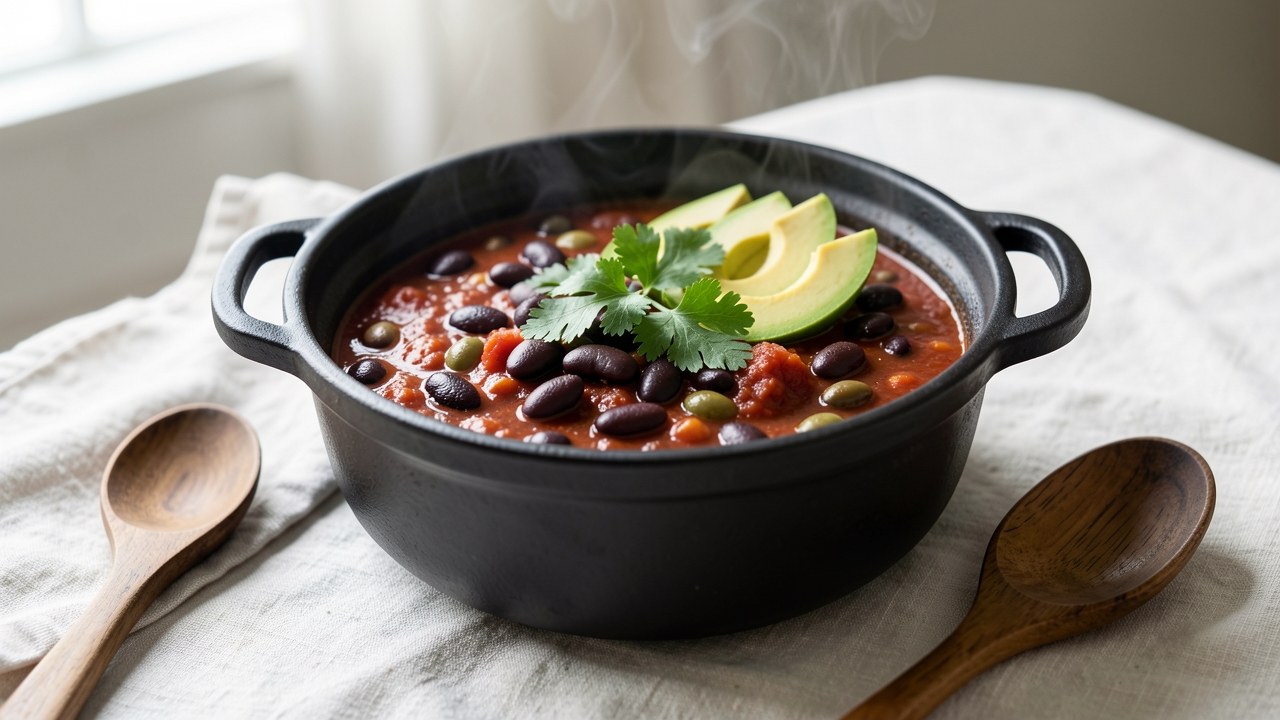
Toppings turn a pot of chili into a meal. Avocado, cilantro, lime wedges, tortilla chips, pickled onions, jalapeños, and radishes are all popular. Sour cream, cheese, and Greek yogurt are vegetarian but not vegan; for a vegan version, use a dairy-free sour cream or skip them. Chili also works over rice, quinoa, couscous, or elbow noodles, and it pairs well with cornbread or a baked sweet potato.
Leftovers can become nachos, baked potato toppings, burritos, or quesadillas. Store cooled chili in an airtight container in the refrigerator for about 4 to 5 days. For longer storage, freeze it in freezer-safe containers for up to 2 to 3 months. These times are general culinary guidance from recipe publishers, not official food-safety limits; use your judgment and follow safe cooling and reheating practices.
- Toppings: avocado, cilantro, lime, tortilla chips, pickled onions, jalapeños, radishes.
- Vegan toppings: dairy-free sour cream, extra avocado, salsa.
- Sides: rice, quinoa, couscous, elbow noodles, cornbread, baked sweet potato.
- Fridge: about 4–5 days in an airtight container.
- Freezer: up to 2–3 months in freezer-safe containers.
Sources: Cookie and Kate, Love and Lemons, The Kitchn, Karissa's Vegan Kitchen, Wyse Guide
Slow cooker and make-ahead notes
A slow cooker can simplify vegetarian chili. Add the ingredients to the crockpot, set it to a slow setting, and let it cook. The exact time varies by appliance and recipe, so follow your slow cooker's guidance for soups and stews. If you want a thicker result, leave the lid off for the last part of cooking, or mash some beans before serving.
- Add all ingredients to the slow cooker; no stovetop browning required if you're short on time.
- Cook on a low or slow setting until the flavors meld and the chili is hot throughout.
- For thicker chili, mash some beans or blend a portion before serving.
Sources: Love and Lemons
Frequently asked questions
What beans work best in vegetarian chili?
Black beans, kidney beans, pinto beans, cannellini beans, and chickpeas are all solid choices. Pinto beans break down slightly and create a thicker chili. Black-eyed peas are another legume option that fits the same formula. If you want a meatier texture, kidney beans and chickpeas hold their shape well.
Sources: Cookie and Kate, Love and Lemons, Serious Eats, The Kitchn, Karissa's Vegan KitchenHow do I make chili taste meaty without meat?
Focus on umami and texture. Soy sauce or tamari adds savory depth; a little Marmite or Vegemite can do the same. Smoked paprika, chipotle in adobo, and fire-roasted tomatoes bring smokiness. For texture, blend a portion of the chili and return it to the pot, mash some beans, or pulse chickpeas in a food processor and stir them in.
Sources: Cookie and Kate, Love and Lemons, Vancouver with Love, Serious Eats, The KitchnCan I make vegetarian chili in a slow cooker?
Yes. Add the ingredients to the slow cooker and cook on a slow setting. The exact time depends on your appliance and recipe, so follow your slow cooker's guidance for soups and stews. For a thicker chili, mash some beans or blend a portion before serving.
Sources: Love and LemonsHow long does vegetarian chili keep in the fridge?
Store cooled chili in an airtight container in the refrigerator for about 4 to 5 days. Some recipes suggest up to 7 days, but the more conservative range is widely recommended. These are general culinary guidelines, not official food-safety rules; use your judgment and follow safe cooling and reheating practices.
Sources: Cookie and Kate, Love and Lemons, Vancouver with LoveCan I freeze vegetarian chili?
Yes. Freeze it in freezer-safe containers for up to 2 to 3 months. Thaw overnight in the refrigerator and reheat gently on the stovetop or in the microwave.
Sources: Love and Lemons, Karissa's Vegan Kitchen, Wyse GuideHow can I make my chili less spicy?
Reduce the chili powder and omit cayenne pepper. If the finished chili is still too hot, stir in a squeeze of lime juice and a small drizzle of olive oil to help tone it down.
Sources: Cookie and Kate, Love and Lemons, The KitchnWhat are good vegan toppings for chili?
Avocado, cilantro, lime wedges, tortilla chips, pickled onions, jalapeños, and radishes are all vegan. For a creamy element, use a dairy-free sour cream or extra avocado instead of dairy sour cream or cheese.
Sources: Cookie and Kate, Love and Lemons, The KitchnCan I use dried beans instead of canned?
Yes. Soak dried beans overnight, then simmer them in the chili until tender, which can take about 1 to 1.5 hours. Taste a bean to check doneness—it should be creamy all the way through, not chalky.
Sources: Wyse GuideSources
- Homemade Vegetarian Chili - Cookie and Kate — Cookie and Kate
- Vegetarian Chili Recipe - Love and Lemons — Love and Lemons
- Easy Vegan Black Bean Chili (Gluten Free) — Vancouver with Love
- The Best Vegetarian Bean Chili Recipe — Serious Eats
- Vegetarian Chili | The Kitchn — The Kitchn
- Homemade Vegetarian Chili Recipe — Real Food Real Deals
- Best Vegan Chili - Karissa's Vegan Kitchen — Karissa's Vegan Kitchen
- Vegetarian Chili with Dried Beans Recipe - Wyse Guide — Wyse Guide