Why one-pot dinners work for vegetarian cooking
A single vessel does more than save dishes. When vegetables, aromatics, sauce and starch cook together, the flavors have a chance to meet in the same pan. Pasta can cook directly in the liquid that becomes its sauce, so nothing is drained away and no second pot of boiling water is needed. Soups and stews build their body from the same ingredients that give them their taste.
The format also fits the way many people actually cook on a weeknight. You can brown, simmer and finish on the stovetop, or slide the whole pan into the oven. Because vegetarian cooking leans on beans, lentils, tofu, paneer and vegetables rather than a centerpiece roast, a single skillet or Dutch oven is often enough to bring the whole meal together.
The trade-off is control. Everything sharing one vessel means everything sharing one cooking time. Recipes that pair quick-cooking ingredients with slow-cooking ones need a sequence, which is why the assembly order matters as much as the ingredient list.
- Fewer pans means a shorter cleanup and a faster path from pantry to table.
- Sauces thicken with the starch and juices already in the pot instead of being made separately.
- Most vegetarian one-pot meals rely on pantry staples such as chickpeas, coconut milk, canned tomatoes, lentils and pasta.
- The method rewards planning the order you add ingredients more than it rewards fancy equipment.
Sources: NYT Cooking (The New York Times), The Kitchn
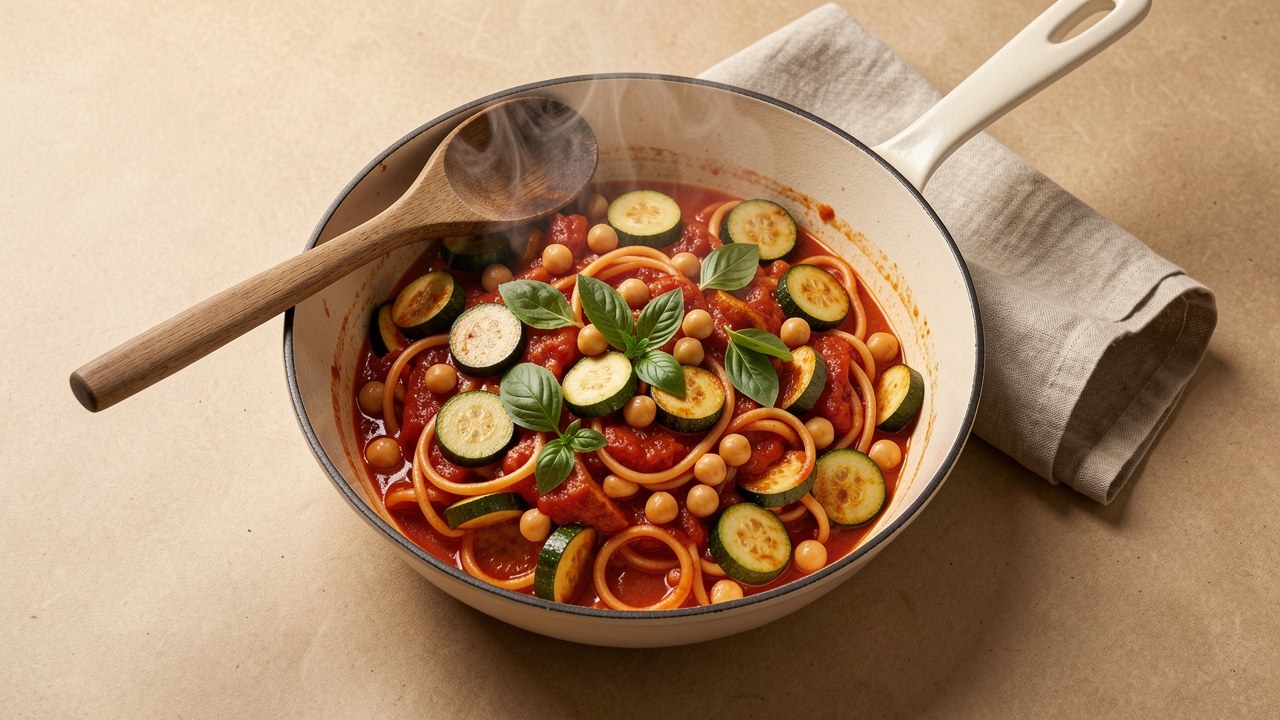
Core one-pot formats: skillet, Dutch oven, sheet pan and pasta pot
The vessel you choose shapes the dish. A wide skillet gives you surface area for browning and evaporation, which is why it suits crisped gnocchi, vegetable curries and chickpea curries. A Dutch oven holds heat steadily and can move from stovetop to oven, making it a natural fit for soups, stews, braises and pasta. A sheet pan spreads ingredients in a thin layer so they roast rather than steam. A saucepan or pasta pot is the right home for one-pot pasta and for soups that need a deeper body of liquid.
Electric pressure cookers count as one vessel too. They are useful for dishes such as mushroom and potato paprikash, where pressure does the work of a long simmer in a fraction of the attention span.
If you own only one of these, you can still cook most of the meals in this collection. A deep skillet with a lid covers much of what a Dutch oven does for smaller batches, and a sheet pan can roast the components of a meal that would otherwise be simmered.
| Format | Best suited to | What it does well |
|---|---|---|
| Wide skillet | Crisped gnocchi, vegetable curries, chickpea curries | Browns and evaporates liquid quickly on the stovetop |
| Dutch oven | Soups, stews, braises, pasta | Holds steady heat and moves from stovetop to oven |
| Sheet pan | Roasted vegetable and protein combinations such as sheet-pan coconut curry with squash and tofu, sheet-pan kimchi fried rice, sheet-pan paneer tikka | Roasts in a single layer for concentrated flavor |
| Saucepan or pasta pot | One-pot pasta and broth-based soups | Provides depth for liquid and even cooking of starch |
| Electric pressure cooker | Pressure-cooked dishes such as mushroom and potato paprikash | Cooks under pressure with minimal monitoring |
Sources: NYT Cooking (The New York Times), The Plant Based School, The Kitchn
Building blocks: protein, vegetable, sauce and starch
A complete one-pot vegetarian dinner usually has four parts: something protein-rich, something vegetable-forward, a sauce or cooking liquid, and a starch or bread to carry it. The four-part framing is a practical way to check that a meal will satisfy, not a strict rule. Supplied recipes show the pattern clearly: curries paired with rice or flatbread, pastas with vegetables and cheese, soups with beans or tortellini.
Protein options that appear in one-pot cooking include red lentils, canned chickpeas and tofu. Paneer can be used as a non-vegan protein in sheet-pan cooking, and the same sheet-pan paneer tikka recipe suggests tofu with no yogurt to make it vegan. Canned white beans and refrigerated cheese tortellini add substance to a soup that comes together quickly.
Vegetables should be chosen with cooking time in mind. Hearty vegetables can go in early; tender greens and quick-cooking items go in near the end. A creamy soup can be adapted by swapping spinach, chard or cabbage for kale, or by using nondairy cream in place of dairy cream.
Sauce and liquid come from canned tomatoes, coconut milk, cream, broth or the pasta cooking liquid itself. Pantry items such as chickpeas, coconut milk and pumpkin purée reduce the need for a fresh shopping trip. Starch is the easiest part to overlook: rice, pasta, gnocchi, polenta or flatbread turns a pot of vegetables into dinner.
- Protein: red lentils, chickpeas, tofu, paneer, white beans, cheese tortellini.
- Vegetables: hearty vegetables early, tender greens and quick-cooking vegetables late.
- Sauce or liquid: canned tomatoes, coconut milk, cream or nondairy cream, broth, pasta cooking liquid.
- Starch or bread: rice, pasta, gnocchi, polenta, flatbread.
Sources: NYT Cooking (The New York Times), The Natural Nurturer, The Plant Based School
Step-by-step assembly for a basic one-pot dinner
The sequence below applies to a simple stovetop one-pot meal. Exact times and liquid amounts belong to individual tested recipes, so use this as an order of operations rather than a formula.
Begin with the aromatics. Warm oil in your vessel over medium heat, then cook onion, garlic, ginger or other aromatics until softened. This is the layer that will flavor everything that follows.
Add the slowest-cooking vegetables next and stir them into the aromatics. If your protein needs browning, this is also the point to add it: tofu and paneer benefit from a little color before liquid arrives.
Pour in the sauce or cooking liquid, then add your starch if it cooks in the pot. One-pot pasta is the clearest example: the pasta cooks in the same liquid that becomes the sauce, building flavor without a separate pot of boiling water. Some pasta recipes skip a separately cooked sauce entirely, as with a five-ingredient pasta with ricotta and lemon.
Bring the pot to a simmer, then reduce the heat and cook until the starch is tender and the liquid has thickened. If you are using a Dutch oven, you can move it to the oven at this stage for even heat.
Finish with tender greens, herbs, citrus, cheese or a swirl of cream. Add them at the end so they keep their texture and brightness. Then rest the dish briefly before serving.
- Warm the vessel and cook aromatics until softened.
- Add slow-cooking vegetables, and brown tofu or paneer if using.
- Pour in the sauce or cooking liquid.
- Add starch that cooks in the pot, such as pasta or rice.
- Simmer until the starch is tender and the liquid thickens.
- Finish with greens, herbs, citrus or cheese, then rest before serving.
Sources: NYT Cooking (The New York Times), The Kitchn
Common pitfalls and how to avoid mushy results
Mushiness usually comes from one of three causes: too much liquid, too little heat, or ingredients with mismatched cooking times. The fixes are straightforward once you know where to look.
Too much liquid is the most common problem. A crowded pot steams instead of browning, and vegetables soften into a uniform texture. If your dish looks soupy near the end, remove the lid and simmer so the liquid can reduce and concentrate.
Mismatched cooking times are the second cause. If you add quick-cooking vegetables at the start, they will be spent by the time the pasta or lentils are done. Add hearty vegetables early and tender ones late. Keeping pieces cut to a similar size also helps them finish at the same time.
For sheet-pan meals, crowding is the enemy. Spread ingredients in a single layer so they roast rather than steam. For skillet dishes that need browning, work in batches if the pan is full. And remember that the supplied recipe collections describe cooking times ranging from roughly 20 to 30 minutes for some dishes to around 45 to 60 minutes or more for others, so the pot, batch size and stove or oven all affect the outcome.
- Reduce excess liquid by simmering uncovered near the end of cooking.
- Add hearty vegetables early and tender greens late.
- Cut pieces to a similar size for even cooking.
- Avoid crowding the pan so ingredients roast or brown instead of steam.
- Check the specific recipe for its intended time rather than assuming a general rule.
Sources: NYT Cooking (The New York Times), The Natural Nurturer
Cleanup and storage notes
One-pot cooking earns its name at cleanup time. Enameled and cast iron Dutch ovens are described as easy to clean and as lasting for decades with proper care. Let the pot cool before washing, and avoid abrupt temperature changes with enameled cookware.
Storage is where the guidance thins out. Some supplied one-pot recipes are described as freezer-friendly, including lentil chili, but the collections do not establish a general rule for which vegetarian one-pot dinners freeze well. In practice, soups, stews and legume-based dishes tend to fare better in the freezer than pasta or crisp-topped preparations, but that is general kitchen experience rather than a specific sourced claim.
Cool leftovers promptly, refrigerate them in shallow containers, and reheat them thoroughly before eating. Because one-pot dishes often combine several ingredients, label containers with the date so you can keep track of what is in the refrigerator.
If you cooked pasta in the sauce, expect the pasta to keep absorbing liquid as it sits. A splash of water or broth when reheating helps loosen it. For a more detailed set of make-ahead options, see the meal prep page.
- Let the vessel cool before washing to protect enameled finishes.
- Cool leftovers promptly and refrigerate in shallow containers.
- Label and date containers so older dishes get used first.
- Loosen reheated pasta dishes with a splash of water or broth.
- Freezer suitability varies by dish; lentil chili is one supplied example described as freezer-friendly.
Sources: The Plant Based School, The Kitchn
How to vary a one-pot dinner without rewriting it
Once you are comfortable with the sequence, you can change a dish by changing one component at a time. Swap the protein, keep the sauce. Swap the vegetable, keep the starch. This is how a single method produces several dinners in a week without repeating the same meal.
Substitutions in supplied recipes show the principle in action: spinach, chard or cabbage can stand in for kale, and nondairy cream can replace dairy cream in a creamy soup. Frozen corn can replace fresh corn in a chowder so the soup works year-round.
Serving style is another lever. A one-pot dish can be served straight from the pot, spooned over polenta, or thinned with water and used as a pasta sauce. A curry that was dinner on Monday can become a sauce for a different starch later in the week.
- Keep the sauce and change the protein or vegetable.
- Keep the starch and change the sauce style.
- Use frozen or canned equivalents to make a dish work in any season.
- Serve the same pot over polenta, rice or pasta to change its character.
Sources: NYT Cooking (The New York Times), The Natural Nurturer
Frequently asked questions
Can I make one-pot vegetarian dinners without a Dutch oven?
Yes. A wide skillet with a lid handles crisped gnocchi, vegetable curries and chickpea curries well, and it gives you the surface area to brown ingredients and reduce liquid. A sheet pan covers roasted combinations such as sheet-pan coconut curry with squash and tofu, sheet-pan kimchi fried rice and sheet-pan paneer tikka. A saucepan or pasta pot works for one-pot pasta and broth-based soups. A Dutch oven is convenient because it moves from stovetop to oven and suits soups, stews, braises and pasta, but it is one option among several rather than a requirement.
Sources: NYT Cooking (The New York Times), The KitchnHow do I keep vegetables from getting mushy in a one-pot meal?
Control the liquid and the timing. Add hearty vegetables early in the cook and tender greens or quick-cooking vegetables near the end, and cut pieces to a similar size so they finish together. If the dish looks soupy near the end, remove the lid and simmer so the liquid reduces. For sheet-pan meals, spread ingredients in a single layer so they roast rather than steam. If the pan is crowded, work in batches so browning can happen.
Sources: NYT Cooking (The New York Times)Which one-pot vegetarian dinners freeze well?
Lentil chili is described in a supplied recipe collection as freezer-friendly, and soups and stews generally hold up better than pasta or crisp-topped dishes. Beyond those examples, the collections do not establish a general rule for which vegetarian one-pot dinners freeze well, so it is worth testing a single portion before freezing a full batch. Cool leftovers promptly, store them in labeled containers, and reheat thoroughly before eating.
Sources: The Plant Based School, The KitchnHow can I add protein to a one-pot vegetarian dinner?
Build the dish around a protein that suits the format. Red lentils and canned chickpeas appear in supplied one-pot recipes, and tofu appears in one-pot or sheet-pan dishes such as sheet-pan coconut curry with squash and tofu. Paneer works as a non-vegan protein in sheet-pan cooking, and sheet-pan paneer tikka suggests tofu with no yogurt to make it vegan. Canned white beans and refrigerated cheese tortellini can add substance to a soup. Choose the protein to match the cooking time of the dish: lentils and beans for simmered pots, tofu and paneer for browning or roasting.
Sources: NYT Cooking (The New York Times), The Natural Nurturer, The Plant Based SchoolDo I need to cook the sauce separately for one-pot pasta?
No. Cooking pasta in the same liquid that develops the sauce, without a separate pot of boiling water, is presented as a one-pot technique that builds flavor. Some recipes go further and skip a separately cooked sauce entirely, as in a five-ingredient pasta with ricotta and lemon. Expect the pasta to keep absorbing liquid as the dish sits, so a splash of water or broth helps when you reheat leftovers.
Sources: NYT Cooking (The New York Times)How long do one-pot vegetarian dinners take to cook?
It depends on the dish, the vessel, the batch size and your stove or oven. Supplied recipe collections describe some one-pot vegetarian recipes as taking about 20 to 30 minutes, while others run around 45 to 60 minutes or more. A roughly 25-minute one-skillet recipe combines skillet-crisped gnocchi with pesto, canned corn and mozzarella, and a carrot red lentil soup using coconut milk or heavy cream is described as done in about 30 minutes. Use the time in the specific recipe you are cooking rather than a general rule.
Sources: NYT Cooking (The New York Times), The Natural NurturerCan I use pantry staples instead of fresh ingredients?
Yes, and several supplied recipes are built that way. A coconut curry with chickpeas, pumpkin and lime calls for canned pantry staples such as chickpeas, coconut milk and pumpkin purée, which reduces a fresh shopping trip. Frozen corn can replace fresh corn in a chowder so the soup can be made year-round. Canned white beans and refrigerated cheese tortellini add substance to a quick soup. Stocking a few of these items makes a one-pot dinner possible on short notice.
Sources: NYT Cooking (The New York Times), The Natural NurturerHow should I clean and store the pot after cooking?
Let the vessel cool before washing. Enameled and cast iron Dutch ovens are described as easy to clean and as lasting for decades with proper care, and avoiding abrupt temperature changes helps protect an enameled finish. For leftovers, cool them promptly, refrigerate them in shallow labeled containers, and reheat thoroughly before eating. If you want to plan several one-pot meals ahead, the meal prep page covers make-ahead approaches in more detail.
Sources: The KitchnSources
- 22 One-Pot Vegetarian Recipes That Keep Effort to a Minimum — NYT Cooking (The New York Times)
- Because the Dishwasher Is You: Delicious One-Pot (or Pan) Dinners — NYT Cooking (The New York Times)
- 15+ Veggie-Loaded One Pot Recipes — The Natural Nurturer
- 25 Easy One-Pot Meals That Sneak In More Veggies — The Plant Based School
- The 50 Best Dutch Oven Recipes for Cozy Dinners — The Kitchn