Why sheet pan dinners work for vegetarian cooking
Sheet pan dinners are a practical way to get a hot, satisfying meal on the table with minimal cleanup. Instead of monitoring multiple pots and pans, you spread ingredients on one pan, slide it into the oven, and let dry heat do the work. This approach is especially useful for vegetarian cooking because vegetables, tofu, tempeh, beans, and other plant proteins all benefit from the concentrated flavor that roasting provides.
For busy weeknights, the appeal is speed and simplicity. Sheet pan dinners are described as a way to cook quickly and reduce the likelihood of ordering takeout, and they are also a good way to use up vegetables in the refrigerator that are about to spoil. Because the method is flexible, you can adapt it to what you have on hand rather than following a rigid recipe.
- One pan means less cleanup and less active cooking time.
- Roasting brings out sweetness in vegetables and gives firm proteins a crisp edge.
- The formula works with whatever vegetables and vegetarian proteins you have available.
- You can serve the result as-is or with cooked grains or simple sides.
Sources: Delish Knowledge (Alexandra Caspero, registered dietitian), Oh My Veggies
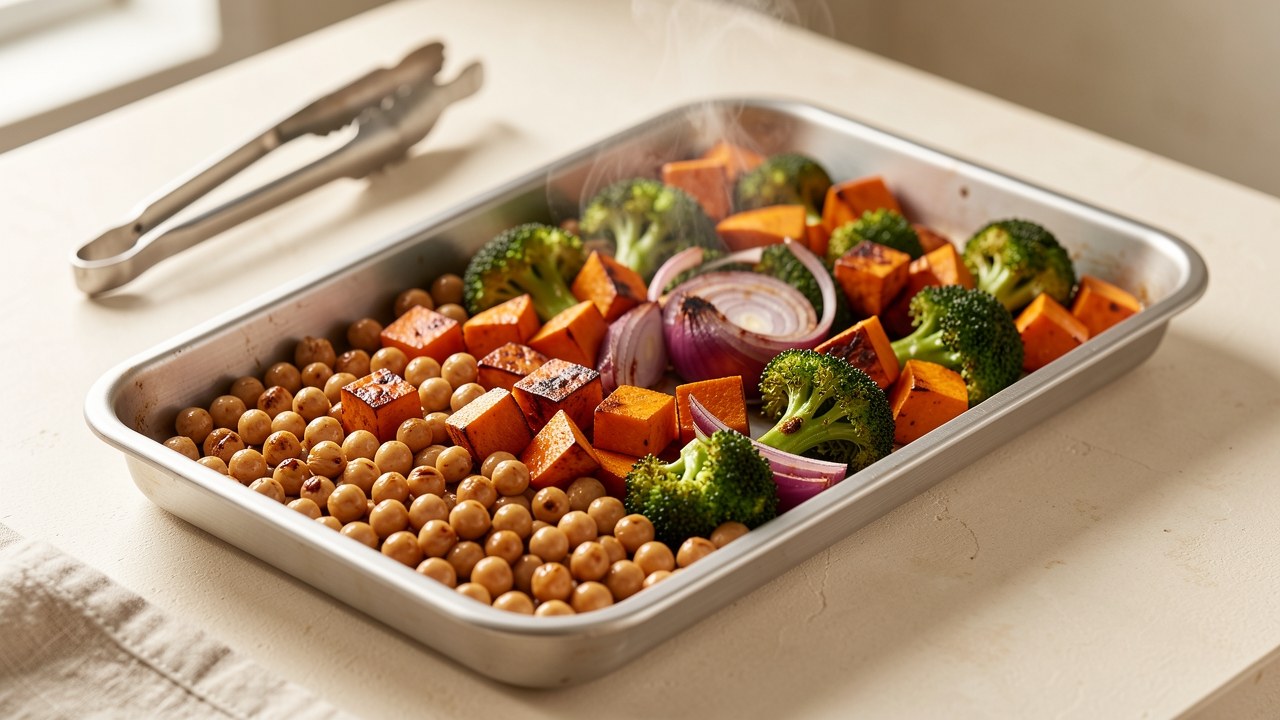
The basic formula: protein, vegetable, sauce, starch
A complete sheet pan dinner has four parts: a protein, a mix of vegetables, a sauce or seasoning, and a starch or serving base. This structure helps you balance texture, flavor, and staying power without needing a specific recipe. The protein can be chickpeas, tofu, tempeh, beans, paneer, or lentils, all listed as vegetarian proteins suitable for sheet pan dinners. Eggs and tofu are also named as plant-based or vegetarian proteins used in sheet pan meals, with cubed tofu offered as a vegan substitute for eggs in a breakfast hash.
Vegetables should be cut into similar-sized pieces so they roast evenly. Firm vegetables like potatoes, carrots, cauliflower, and winter squash can go on the pan at the start. Softer vegetables like bell peppers, snap peas, cherry tomatoes, and zucchini need less time, so add them later or cut them larger. The sauce can be as simple as olive oil, salt, and pepper, or a mixture of soy sauce, vinegar, and herbs. The starch, such as cooked rice, quinoa, tortillas, or crusty bread, is usually prepared separately and used to catch the roasting juices.
- Protein options: chickpeas, tofu, tempeh, beans, paneer, lentils, eggs.
- Vegetables: combine firm and soft types, adding soft ones later.
- Sauce: oil-based or acidic mixtures help season and prevent sticking.
- Starch: cook grains or warm tortillas while the pan roasts.
Sources: TFRecipes (aggregates Allrecipes, EatingWell, Insanely Good, Simply Recipes, Delish, etc.), Delish Knowledge (Alexandra Caspero, registered dietitian), SoupAddict (Karen Gibson)
Roasting times and temperature by vegetable density
The timing and temperature you choose should match the density and cut size of your vegetables. A common approach for mixed vegetable sheet pan dinners is to roast at 425°F (about 220°C) for 30 to 40 minutes, checking during the last 10 minutes. Another example method roasts vegetables and chickpeas at 350°F (180°C) for 35 to 40 minutes, until cooked through and crispy. These ranges come from recipe blogs and are starting points for texture and browning, not safety guidelines.
The table below groups vegetables by density and notes the practical adjustments that help them finish at the same time. The goal is to cut denser vegetables smaller or place them toward the edges of the pan where heat is more direct, while adding tender vegetables later or cutting them larger so they do not overcook.
| Vegetable type | Examples | Cut size | When to add | Notes |
|---|---|---|---|---|
| Dense, firm | Potatoes, carrots, winter squash, cauliflower | Cut into 1/2-inch to 1-inch pieces | At the start | Place toward the edges of the pan or cut smaller so they cook through. |
| Medium density | Broccoli florets, bell peppers, zucchini, red onion | Cut into 1-inch pieces | At the start or after 10 minutes | Can roast with firm vegetables if cut larger or added later. |
| Tender, quick-cooking | Cherry tomatoes, snap peas, broccolini, asparagus | Leave whole or cut into 2-inch pieces | During the last 10 to 15 minutes | Add later so they do not turn to mush. |
Sources: Earth of Maria (syndicated Oh My Veggies recipe), Oh My Veggies, SoupAddict (Karen Gibson)
Example combinations for weeknights
These combinations are drawn from vegetarian sheet pan recipes and show how the formula works in practice. They are meal ideas, not complete recipes with quantities or serving sizes. Use them as inspiration and adjust based on what you have.
Popular themes include spiced chickpeas with sweet potatoes, teriyaki tofu with carrots and broccoli, sweet potato fajitas, maple balsamic tempeh with brussels sprouts, butternut squash and carrots, spicy tofu with green beans, and chickpea and vegetable shawarma bowls. Each can be served as-is or with cooked grains or additional side dishes.
- Spiced chickpeas with sweet potatoes: roast at 425°F (220°C) for about 25 to 30 minutes until sweet potatoes are tender. Serve with cooked grains.
- Teriyaki tofu with carrots and broccoli: roast at 400°F (200°C) for about 25 minutes, adding broccoli during the last 10 minutes. Serve over rice.
- Sweet potato fajitas: roast sliced sweet potatoes and bell peppers at 425°F (220°C) for 25 to 30 minutes. Serve with warm tortillas.
- Maple balsamic tempeh with brussels sprouts, butternut squash, and carrots: roast at 400°F (200°C) for 30 to 35 minutes. Drizzle with maple balsamic glaze.
- Spicy tofu with green beans: roast cubed tofu and green beans at 400°F (200°C) for 25 to 30 minutes. Toss with chili sauce.
- Chickpea and vegetable shawarma bowls: roast chickpeas with cauliflower and carrots at 425°F (220°C) for 25 to 30 minutes. Serve over grains with tahini sauce.
Sources: TFRecipes (aggregates Allrecipes, EatingWell, Insanely Good, Simply Recipes, Delish, etc.), Delish Knowledge (Alexandra Caspero, registered dietitian)
Common mistakes and how to avoid them
Even with a simple formula, a few common pitfalls can turn a sheet pan dinner into a soggy or unevenly cooked meal. The most frequent issue is overcrowding the pan. Spreading ingredients in a single layer and avoiding too much overlap is advised in sheet pan recipes. When vegetables touch and pile up, they release moisture that gets trapped, causing steaming instead of roasting.
Another mistake is adding all ingredients at the same time. Firm vegetables and proteins need longer than soft vegetables. Add quick-cooking items later, or cut them into larger pieces so they do not overcook. Also, be careful with wet marinades or watery vegetables like zucchini and tomatoes; pat them dry and use just enough oil to coat. Finally, preheat the oven fully before adding the pan so the ingredients start roasting immediately.
- Use a large enough pan to keep ingredients in a single layer.
- Cut vegetables into similar-sized pieces for even cooking.
- Add soft vegetables and quick-cooking proteins later in the roasting process.
- Pat wet ingredients dry and avoid excess oil.
- Preheat the oven before adding the pan.
Sources: Oh My Veggies, SoupAddict (Karen Gibson)
Frequently asked questions
What vegetables roast well together on one pan?
Vegetables that share similar density and cooking times work best together. Firm vegetables like potatoes, carrots, cauliflower, and winter squash can roast together. Softer vegetables like bell peppers, snap peas, cherry tomatoes, and zucchini can be combined, but they need less time, so add them later or cut them larger. You can also mix firm and soft vegetables by starting the firm ones first and adding the soft ones halfway through.
Sources: SoupAddict (Karen Gibson)How do I keep vegetables from getting soggy?
The key is to spread ingredients in a single layer and avoid too much overlap. When vegetables are crowded, they release moisture that gets trapped and causes steaming. Use a large sheet pan, pat wet vegetables dry, and toss with just enough oil to coat. Also, make sure your oven is fully preheated and use a high enough temperature, such as 400°F to 425°F, as called for in many sheet pan recipes.
Sources: Oh My Veggies, SoupAddict (Karen Gibson)Can I add tofu or tempeh to a sheet pan dinner?
Yes. Tofu and tempeh are both listed as vegetarian proteins suitable for sheet pan dinners. One example method roasts tofu at 400°F (200°C) for 30 minutes, flipping halfway through. Tempeh strips can be roasted with snap peas, sliced bell peppers, and thinly sliced carrots at 400°F (200°C) for 25 minutes. Press tofu well before roasting to remove excess water and help it brown.
Sources: TFRecipes (aggregates Allrecipes, EatingWell, Insanely Good, Simply Recipes, Delish, etc.), Delish Knowledge (Alexandra Caspero, registered dietitian)Do I need to preheat the pan?
You do not need to preheat the pan. Spread ingredients in a single layer on a room-temperature pan, then roast in a fully preheated oven. Preheating the oven is important for even roasting and browning, but preheating the pan itself is not necessary and can be risky if you are adding oiled ingredients.
Sources: Oh My VeggiesCan I prepare the vegetables ahead of time?
Yes, you can cut and store vegetables covered in the refrigerator before oiling and seasoning. However, keep in mind that roasted vegetables soften in the fridge and do not return to their original roasted firmness after reheating. For best texture, roast them the same day you plan to serve them.
Sources: SoupAddict (Karen Gibson)How long do leftovers keep?
Cooked sheet pan vegetables and chickpeas keep well in the refrigerator for up to 5 days and are freezer-friendly. Store them in an airtight container. Reheat in the oven or a skillet to help them retain some crispness, though they will be softer than when freshly roasted.
Sources: Earth of Maria (syndicated Oh My Veggies recipe), Oh My VeggiesWhat can I serve with a sheet pan dinner?
Sheet pan dinners can be served over or alongside cooked grains such as rice, quinoa, farro, orzo, or pearl couscous, or mixed with pasta. You can also serve them with crusty bread, tortillas, or a simple side salad. Choose a base that complements the flavors of your vegetables and protein.
Sources: Delish Knowledge (Alexandra Caspero, registered dietitian), SoupAddict (Karen Gibson)Is the miso in sheet pan sauces always vegetarian?
No. Many misos are made with dashi that contains bonito (flaked fish), which would make the dish non-vegetarian. Check the label before buying miso for a vegetarian sheet pan sauce, and look for miso labeled as vegetarian or made without dashi.
Sources: Oh My VeggiesSources
- Vegetarian Sheet Pan Dinner With Chickpeas And Veggies Recipes — TFRecipes (aggregates Allrecipes, EatingWell, Insanely Good, Simply Recipes, Delish, etc.)
- Sheet Pan Meal With Vegetables And Chickpeas (Vegan) - Oh My Veggies — Earth of Maria (syndicated Oh My Veggies recipe)
- 9 Delicious Vegetarian Sheet Pan Dinners - Delish Knowledge — Delish Knowledge (Alexandra Caspero, registered dietitian)
- Vegetable And Chickpea Sheet Pan Meal - Oh My Veggies — Oh My Veggies
- Mediterranean Vegetable Sheet Pan Dinner – SoupAddict — SoupAddict (Karen Gibson)
- Za'atar-Spiced Veggie Sheet Pan Dinner By OhMyVeggies.com — Oh My Veggies