The vegetarian pasta dinner formula
A dependable vegetarian pasta dinner comes together when four parts are balanced: pasta, a sauce foundation, vegetables that can stand up to heat, and a plant protein. The formula is not a strict recipe. It is a way to look at what is already in the kitchen and decide what to cook without hunting for a new list.
Start with the sauce. Tomato, garlic and olive oil, cream, or pesto each sets a different expectation for the rest of the bowl. Next choose a vegetable that will not collapse into water. Then decide whether the dish needs beans, tofu, or a protein pasta to make it filling. Finally, cook the pasta in well-salted water until al dente so it does not turn mushy when it is tossed with a hot sauce. This step appears in tested recipes from both Veggie Inspired and Elavegan.
The fourth part is timing. Vegetables that need longer cooking go into the pan first. Aromatics such as onion and carrot benefit from a head start before more delicate vegetables like zucchini or eggplant are added, which helps everything cook evenly instead of turning to mush. Once the sauce is ready, the drained pasta goes in with a splash of reserved cooking water, which loosens the sauce and helps it cling.
- Choose one sauce foundation and one or two vegetables that match its weight.
- Cook pasta in salted water to al dente, not beyond.
- Reserve a cup of pasta water before draining and add it by the spoonful when tossing.
- Finish the dish in the pan, not in the serving bowl, so the sauce coats every piece.
Sources: Veggie Inspired, Elavegan
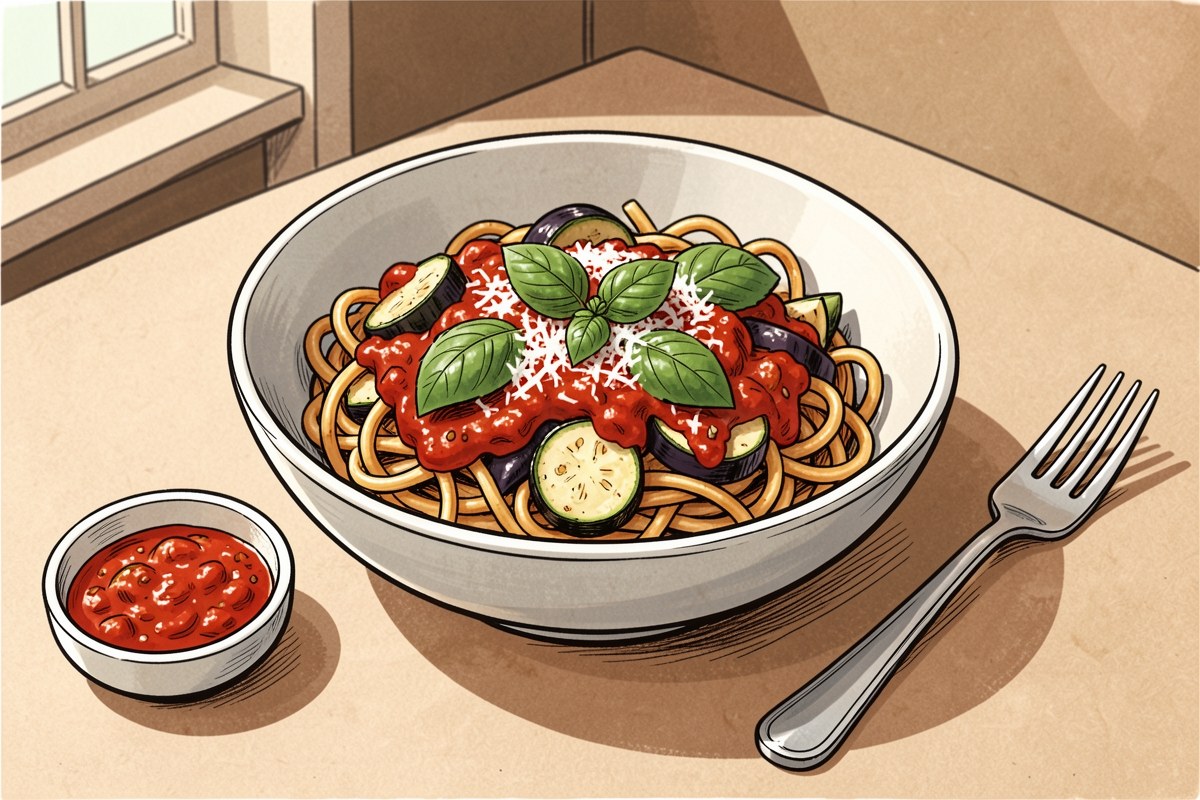
Sauce foundations: tomato, garlic-oil, cream, and pesto
Tomato sauces are the most forgiving base for a vegetarian pasta dinner. A chunky vegetable marinara benefits from simmering uncovered, because covering the pan traps steam and dilutes the sauce instead of letting it reduce. Canned tomatoes, fresh tomatoes, or a mix both work. If the sauce tastes flat after twenty minutes, a pinch of salt and a little more olive oil usually bring it back before serving.
Garlic and olive oil is the quickest foundation: sliced garlic warmed gently in oil, then vegetables and pasta added directly to the pan. This method suits tender greens, peas, and asparagus, which are all common partners for pasta in published vegetarian collections. The risk is burning the garlic, so keep the heat moderate and add a splash of pasta water before the pan goes dry.
Cream sauces are richer and need less liquid at the end. Recipes that blend roasted tomatoes, red bell pepper, onion, garlic, silken tofu, cashews, and seasonings produce a smooth, creamy tomato-based sauce that behaves more like a cream sauce than a marinara. Silken tofu is described in that source as the most neutral and creamiest option, while firmer tofu gives a stronger flavor and a less silky texture.
- Tomato: simmer uncovered so the sauce thickens rather than steams.
- Garlic-oil: warm the garlic gently and loosen with pasta water before it browns.
- Cream or blended: use silken tofu or cashews for body; adjust with pasta water at the end.
- Pesto: basil, kale, broccoli, and pea sauces all appear in vegetarian pasta roundups.
Sources: Veggie Inspired, Elavegan, Food52
Vegetables that hold up in pasta
The best vegetables for pasta keep some shape after cooking. Zucchini and eggplant are often added after harder vegetables because they release water and soften quickly; giving onion and carrot a head start keeps the final dish from turning uniform and mushy. Mushrooms, bell peppers, and broccoli also work well because they brown rather than dissolve.
Asparagus, peas, and lemon are combined with pasta in multiple published vegetarian recipes, usually in a garlic-oil or light cream base. These are faster-cooking vegetables, so they go into the pan near the end. Hearty greens such as kale can be added earlier with a splash of water, or later if the dish already has enough sauce.
For a heartier result, stir a drained and rinsed 15-ounce can of white beans, chickpeas, or lentils into a vegetable pasta sauce. This turns a side-style pasta into a full dinner without changing the sauce method. If the sauce becomes thick after adding beans, loosen it with pasta water rather than more oil.
- Start with onion, carrot, or other firm vegetables before delicate ones.
- Add zucchini, eggplant, asparagus, and peas later so they keep their shape.
- Use mushrooms and peppers when you want browning and deeper flavor.
- A 15-ounce can of drained beans or lentils can be stirred in for extra heartiness.
Sources: Veggie Inspired, Food52
Plant protein additions and how they change timing
Plant proteins can be built into the sauce, added at the end, or chosen as the pasta itself. A drained can of white beans, chickpeas, or lentils goes into the sauce near the end and needs only enough time to heat through. Cubed marinated baked tofu can be added to a vegetable pasta dish as a protein boost. It does not need long cooking, so it goes in once the sauce is nearly done.
Blended tofu sauces change the order of operations. When silken tofu is blended with roasted tomatoes and peppers, the sauce is essentially finished in the blender and only needs warming. In that case the pasta water is used to adjust consistency after the sauce and pasta are combined, not to cook the tofu.
Protein pasta made from chickpea or lentil flour is another route to a higher-protein vegetarian pasta dinner. These pastas can cook differently from wheat pasta, so check the package timing and taste a piece early. Because the sauce and vegetables stay the same, protein pasta is the easiest swap when the rest of the formula is already set.
- Beans, chickpeas, and lentils: add near the end, just to heat through.
- Baked tofu: cube and fold in when the sauce is nearly done.
- Blended silken tofu: treat the blender sauce as finished, then warm and loosen with pasta water.
- Protein pasta: follow the package timing and taste early so it does not overcook.
Sources: Veggie Inspired, Elavegan, EatingWell, Pinterest
Build-your-own pasta table with example combinations
Use this table as a starting point rather than a rulebook. Each row pairs a sauce with vegetables and a protein so the timing and texture stay balanced. Medium shapes such as penne, rotini, rigatoni, and gemelli are recommended for holding chunky vegetable sauces. For lighter sauces, long pasta or small shapes also work, but the combination table is organized around the heavier pairings that benefit most from the formula.
| Sauce foundation | Vegetables | Plant protein | Timing notes |
|---|---|---|---|
| Chunky tomato marinara | Onion, carrot, zucchini, eggplant | 15-ounce can white beans or chickpeas | Simmer uncovered; add beans near the end |
| Garlic and olive oil | Asparagus, peas, lemon | Cubed marinated baked tofu | Cook vegetables quickly; fold in tofu to warm |
| Blended creamy tomato | Roasted red pepper, onion, garlic | Silken tofu and cashews in the sauce | Blend, warm gently, loosen with pasta water |
| Basil or kale pesto | Broccoli, peas, or green beans | Protein pasta or white beans | Toss off heat; thin pesto with pasta water |
Sources: Veggie Inspired, Elavegan, EatingWell, Food52
Common pitfalls: gluey pasta, watery sauce, bland results
Gluey pasta usually comes from overcooking or from letting drained pasta sit without sauce. Cooking to al dente prevents mushiness when the pasta is tossed with hot sauce. If the pasta is done before the sauce, drain it and toss with a little olive oil or keep it in the cooking water off the heat.
Watery sauce almost always comes from vegetables that released liquid or from a covered pan. Simmering a vegetable marinara uncovered lets it reduce and thicken, while covering traps steam and dilutes the sauce. If the sauce is already watery, remove the lid, raise the heat slightly, and let it reduce before adding pasta water.
Bland results are usually a seasoning problem rather than an ingredient problem. Salting the pasta water, tasting the sauce before the pasta goes in, and finishing with a little olive oil or lemon can correct most flat bowls. If the sauce tastes sharp, a small amount of pasta water will soften it. If it tastes thin, keep reducing. These are home-cooking adjustments, not fixed measurements, so taste as you go.
- Cook pasta to al dente and sauce it promptly.
- Simmer tomato sauces uncovered to reduce rather than steam.
- Taste the sauce before adding pasta; adjust salt, oil, or acid.
- Use pasta water to loosen thick sauces and to help them cling.
Sources: Veggie Inspired, Elavegan
Frequently asked questions
What pasta shapes work best for vegetarian dinners?
Medium shapes such as penne, rotini, rigatoni, and gemelli are recommended for holding chunky vegetable sauces. Lighter sauces like garlic and oil or pesto can work with long pasta, but the heavier combinations in this guide are easier with a shape that traps vegetables and beans.
Sources: Veggie InspiredHow do I keep pasta from getting watery when adding vegetables?
Simmer the sauce uncovered so extra liquid can reduce, and add quick-cooking vegetables near the end rather than at the start. If the finished dish still looks watery, toss it over higher heat for a minute before serving instead of adding more liquid.
Sources: Veggie InspiredCan I make vegetarian pasta dinners ahead of time?
You can prepare the sauce and vegetables ahead, then cook the pasta fresh and combine just before serving. Pasta that sits in sauce for a long time tends to soften, so if you are storing portions, keep the sauce and pasta separate and reheat them together gently.
Sources: Veggie Inspired, ElaveganHow do I add protein to vegetarian pasta without meat?
Stir in a drained and rinsed 15-ounce can of white beans, chickpeas, or lentils near the end of cooking, or fold in cubed marinated baked tofu. Blended silken tofu can also be used as the base of a creamy tomato sauce, and protein pasta made from chickpea or lentil flour raises the protein in the dish without extra steps.
Sources: Veggie Inspired, Elavegan, EatingWell, PinterestWhat is a good sauce-to-pasta ratio for two people?
There is no fixed ratio that fits every sauce, so the reliable approach is to cook the pasta to al dente and then add sauce gradually in the pan, using reserved pasta water to reach a consistency that coats each piece without pooling. Start with enough sauce to barely coat the pasta and add more as needed.
Sources: Veggie Inspired, ElaveganSources
- Garden Veggie Pasta | Easy Vegan Vegetable Marinara — Veggie Inspired — Veggie Inspired
- High-Protein Pasta Sauce - Elavegan — Elavegan
- 25 Vegetarian Pasta Dinners That Are High in Protein — EatingWell
- 38 Best Vegetarian Pasta Recipes - Easy Meatless Pasta Dinners — Food52
- Vegetarian Protein Pasta — Pinterest